
STORYTELLING AND SCRIPTS · PILLAR GUIDE
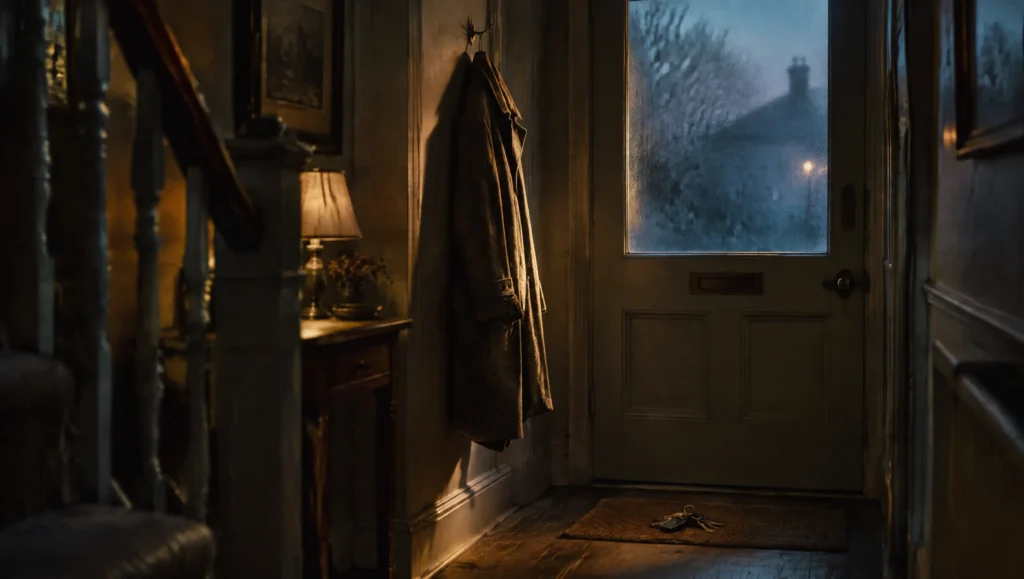
A coat is still hanging by the door. Nobody has moved it, because moving it would make the absence real. Life goes on around it for weeks. Then one evening a key turns in the lock. A familiar hand reaches for the coat, and the person who kept it there laughs before she cries. If your chest warmed a little just now, you have felt the thing this guide is about. It has a name, kama muta, the feeling of being moved. It is also the single most reliable reason people share a short film. This guide is the art of it. It covers what the word means, how storytellers have always built for it, and why the story has to come before the script. It then shows which emotions to reach for, how AI helps you write it, how the character grows out of it, and how the camera makes it visible.
At a glance
- Kama muta is Sanskrit for moved by love. It is the feeling when a close bond suddenly strengthens, returns or becomes visible.
- It is the oldest story in the world, separation and reunion, and every culture builds practices to evoke it.
- Story comes before script, and script before tools. A film that starts from a tool gives the audience nothing to carry home.
- The film travels a path: vulnerability, tension, the lowest beat, recognition, connection, release, callback.
- AI writes the script with you once the real event and the relationship are clear; it never chooses the moment.
- You build the character sheet for the story, and the camera moves from distance to closeness with it.
You will need: a real moment of connection from your own life or observation. Add the willingness to tell it without decoration, and this series, one article per step.
What Kama Muta Means
Many people assume kama muta is Japanese. It is Sanskrit, two words that mean moved by love. A group of psychologists chose the name after a decade studying the feeling English speakers call being moved, touched or heartwarmed. No English word covered it cleanly. If you have a Japanese idea in mind, the nearest cousin is mono no aware, the gentle ache of things passing. That is a different feeling, but it shares the quietness this art depends on.
The research says three things a filmmaker needs. First, the feeling is relational. It arrives when a family-kind bond suddenly becomes stronger, begins, returns, or becomes vividly noticeable. The key word is suddenly. A warm relationship on its own does not do it. A warm relationship that goes missing and comes back does. Second, it has a body. Moist eyes, a lump in the throat, warmth in the centre of the chest, sometimes goosebumps. Third, it moves people towards each other. After it, people want to hug, help, stay close, and tell someone. That last effect is why moved audiences share films. This feeling, rather than sadness or awe, is the engine of a film that travels. The full account, with what kama muta is not, is in what kama muta means.
The Art of Being Moved
Long before anyone named it, storytellers built for it. Every culture loves the same story most. Someone overcomes every obstacle to reach the person they belong to. Weddings, homecomings, anthems, memorials, the cute animal and the quiet film all exist to produce the same surge. Consequently, the art is not a modern trick. It is the oldest craft there is, and the research simply tells us what it was always doing.
For a short film the lesson is a shape. Open a distance the audience can feel. Hold it long enough to hurt a little. Close it suddenly, in one visible act. Then let the body register it before anyone explains it. Every great quiet film you can think of does this, and the art of emotional storytelling shows the pattern in films you already love.
Why Story Comes Before the Script
Most AI films start from a tool. Someone has a model, a character, a beautiful shot, and builds outwards from it. The result is often lovely, and nobody remembers it. There was never a relationship to care about. A film started from a tool has nothing for the audience to carry home. A film started from a feeling has one thing, and one thing is enough for fifty seconds.
So the order never changes. First the real event, written in plain language before any prompt. Next, the relationship at the heart of it, in one sentence. After that, the script. Then, and only then, the character, the shots and the voice. The benefits of a beautiful story are the ones you cannot buy later. People remember it, send it to someone, and trust the person who made it. Afterwards, they do something. Why story comes before the script makes the full case.
The Emotions to Reach For
A film built for kama muta travels a path, and the path is the same one the voice travels. It begins in vulnerability, something human and imperfect we recognise. It moves through curiosity and escalation into tension or loneliness. That is the lowest beat, the instant it seems the connection may not happen. Then recognition, connection, release. Finally, a change in the protagonist, and a callback to the opening image with a different meaning.
Just as important are the emotions to avoid. Pity, which makes the audience look down. Invented tragedy, which they can smell. Awe for its own sake, which makes them feel small rather than close. And sentimentality, which is kama muta with the volume turned up by the filmmaker instead of by the audience. The restraint rules are simple. Never invent trauma, and never tell the audience what to feel. Allow one peak only, let silence and touch carry meaning, and protect the dignity of anyone whose story it is. The emotional arc of a short film walks the whole path.
From Feeling to Story
The feeling becomes a story through one sentence. This is a story about someone and someone, who begin emotionally somewhere, until something suddenly changes the connection between them. Fill that in and you have the film. The masterclass expands it into nine beats: ordinary world, vulnerability, separation, escalation, lowest beat, the kama muta turn, physical evidence, meaning, callback. The nine fold into fifty seconds, because several beats can live inside one image or one line.

Prompt 1: The Relationship Sentence (run in Claude or ChatGPT on a real event)
Here is a real event from my life or something I observed. Write the relationship sentence for it in this exact form: "This is a story about [person] and [person], who begin emotionally [state], until [event] suddenly changes the connection between them." Then answer in one line each: what the distance is before the turn, what suddenly changes the connection, what physical sign makes the change visible, and what the protagonist understands afterwards. Do not invent facts.

Event: [PASTE IN PLAIN LANGUAGE]
Short film story structure built on one feeling maps the nine beats onto the five-beat story the blog already uses.
Writing the Kama Muta Script With AI
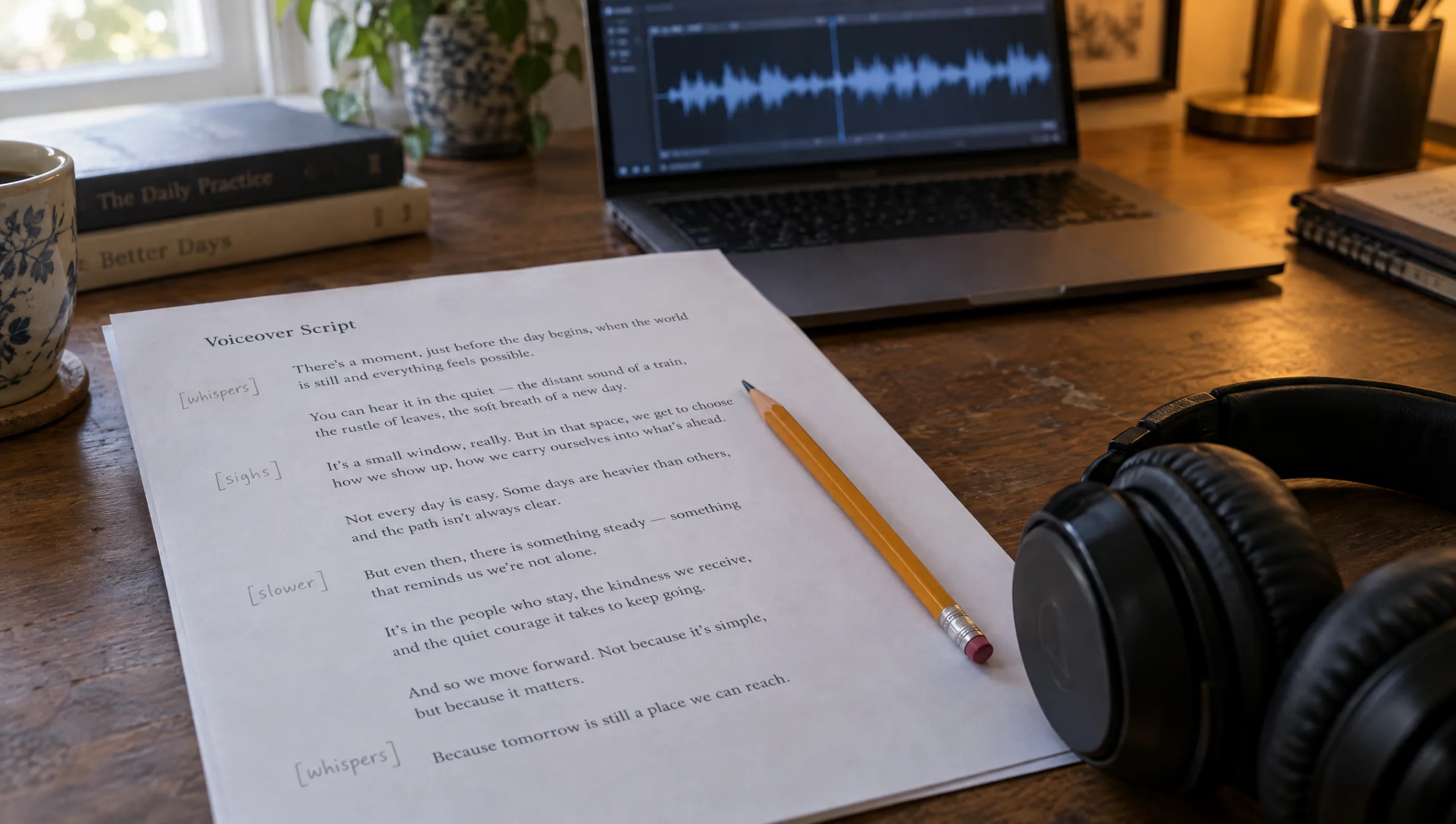
Once the event and the relationship are clear, AI becomes a real co-writer. It can hold the structure, keep the word count, find the hook and cut the explanation. Meanwhile, you keep the one decision it cannot make: which moment matters and why. The master prompt below is the one I use. Fill the story information from the relationship sentence. It returns a clean fifty-second voiceover, plus the same script formatted for Eleven v4 with restrained performance directions.
Prompt 2: The Kama Muta Master Prompt (run in Claude or ChatGPT; the full version with the three-point explanation is in the masterclass)
Act as a cinematic short form storyteller, scriptwriter and voice director. Transform the real experience below into an emotionally powerful short form voiceover built around kama muta: the sudden intensification of human connection. The story must feel cinematic, intimate, truthful and emotionally earned.

STORY INFORMATION
Protagonist: [WHO]
Real event: [WHAT HAPPENED]
Opening situation: [LIFE BEFORE]
Vulnerability: [WHAT MAKES THEM HUMAN]
Goal: [WHAT THEY WANTED]
External struggle: [THE PHYSICAL WORLD]
Interpersonal struggle: [WHO COULD NOT HELP]
Internal struggle: [FEAR, DOUBT, SHAME, GRIEF]
Lowest moment: [WHEN THEY FELT ALONE]
Relationship at the heart of the story: [WHO MATTERS]
Kama muta moment: [THE SUDDEN CONNECTION]
Physical connection: [HAND, EMBRACE, TEARS, SILENCE, BREATH, EYES]
Transformation: [WHAT THEY UNDERSTOOD]
Message: [WHAT THE AUDIENCE SHOULD CARRY]
Opening callback: [IMAGE OR OBJECT THAT RETURNS]

REQUIREMENTS
Natural, conversational British English. Make the protagonist vulnerable at once. Open with a cinematic hook that creates curiosity without explaining everything. Three acts: empathy and the ordinary world; escalating external, interpersonal and internal struggle; the sudden kama muta moment, release, transformation and message. Do not invent achievements, tragedy, trauma or artificial emotion. Imply the wider story through meaningful details. Build to one clear moment of connection and show the response physically. Let the release arrive suddenly but earned. Use contrast: before and after, distance and closeness, silence and release. End with transformation and a callback to the opening. Avoid motivational clichés, corporate language, melodrama and overexplaining. Write 82 to 88 spoken words for about fifty seconds of intentional delivery, in short natural sentences with room for pauses. No captions or camera directions in the spoken words. Follow this emotional movement: vulnerability, curiosity, escalation, loneliness or tension, recognition, human connection, emotional release, transformation, callback.

OUTPUT
Part 1: the clean voiceover script only, 82 to 88 words.
Part 2: the same script formatted for ElevenLabs v4 with restrained performance directions such as [thoughtful], [slightly amused], [anxious], [whispers], [voice trembling], [crying softly], [relieved], [tenderly], [reflective], [warmer], used only where the performance genuinely changes, and an ellipsis where a pause is needed.
The script that comes back is a draft, not a film. Read it aloud and cut any line that explains what the audience already understands. Then run the hook test. If the first line could belong to any creator or any story, it is too generic. Writing a short film script with AI takes the script through the moment finder, the hook types and the sentimentality cut.
From Script to Character
Only now does the character sheet begin, and it begins from the script. The relationship sentence becomes the character description. Her vulnerability becomes the way she stands and dresses. The opening callback, a coat, a phone, a recipe card, joins the wardrobe lock so it holds in every frame. You design the second character as the closeness that arrives, which usually means a contrast. Then you build the sheet the way the character series teaches, with the turnaround, the wardrobe sheet and the Soul ID. That is how the face holds across the film. The method is in building the AI character your script needs, and the sheet itself in how to create a consistent AI character from scratch.
Making Connection Visible
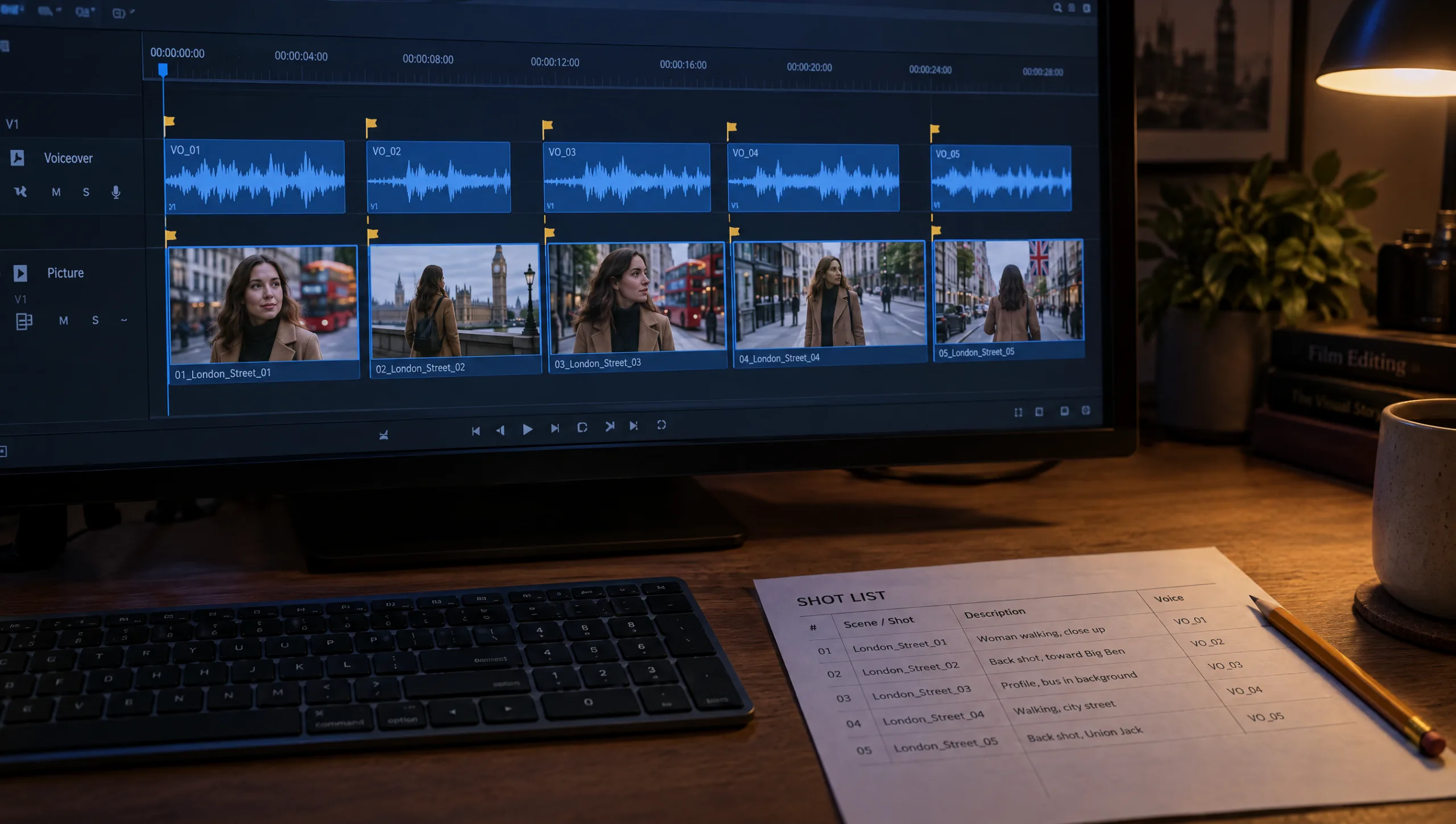
The camera tells the relationship. Start wide when people are emotionally separate and move closer as connection intensifies. Hands carry meaning without dialogue: hesitation, reaching, holding, releasing. Thresholds, doors, windows and tables show separation before reunion. An object held in the opening returns in the callback. The turn is the closest shot in the film, and the extreme close-up of the hands is the physical evidence. Then the callback wide shows the two of them together where one of them was alone. Shot sizes and emotion places every shot size, from extreme wide to the cowboy shot to the extreme close-up, on that arc. The voice follows the same path, and directing an AI voiceover with ElevenLabs audio tags shows a real tagged script with the before and after you can hear.
The Worked Example: An Empty Hand
I built my own fifty-second film on all of this. Here is the relationship sentence. This is a story about a mother and a daughter, who begin emotionally side by side but looking at screens, until a stolen phone suddenly changes the connection between them. In the ordinary world, a woman is calm and unaware, her phone zipped into her bag. Her distance is a theft, a form, and an insurance policy that covers damage but not theft. At the lowest beat a hand rises to photograph light between the buildings, and the hand is empty. The turn is one gesture. Her daughter says one word, puts her own phone away, takes the empty hand, and pulls her into her arms. The callback is the phone, which stored the memories but was never the memory.


A note from Patchy
The Series
This guide is the map. Each step has its own article, in this order. What kama muta means; the art of being moved; why story comes before the script; the emotions to reach for. Then from feeling to story; writing the script with AI; from script to character; making connection visible; directing the voice and passing the audit. Read them in order once, then use them as a working system every time you make a film.
- Part 1. What kama muta means: the word, the feeling and the science
- Part 2. The art of being moved: how storytellers have always built for it
- Part 3. Why story comes before the script
- Part 4. The emotions to reach for: from distance to release
- Part 5. From feeling to story: the relationship sentence and the nine-beat map
- Part 6. Writing the kama muta script with AI
- Part 7. From script to character: building the sheet the story needs
- Part 8. Making connection visible: the shot grammar of kama muta
- Part 9. Direct the voice and pass the audit
Common mistake
Starting from the tool. A new model arrives, you generate a beautiful character, and you build the film outwards from the image. It looks wonderful, and the next scroll erases it, because nothing arrived and nobody felt anything. Start from the coat on the hook. The tool comes last.
Quick version
Kama muta is Sanskrit for moved by love. It is the feeling when a close bond suddenly strengthens or returns, felt in the chest and the throat, and the reason people share a film. It is the oldest story shape, separation and reunion. Build from the feeling. Start with the real event and the relationship sentence, write the script with the master prompt, then design the character, then move the camera from distance to closeness. Never invent tragedy, never tell the audience what to feel, one peak, and end on the opening image changed.
Your move
Before you open any tool, write down one real moment when connection suddenly arrived, in plain language. It can be from your life or something you saw. Then run Prompt 1 on it. If the relationship sentence has a distance and a sudden change, you have a film. If it does not, find another moment.
Get the prompts. Both prompts from this guide are in the free Prompt Library under Story. The relationship sentence and the nine-beat map sit with them on one page.
Related articles
- how to write a 50-second story for an AI short film
- turning a script into a shot list for AI video
- directing an AI voiceover with ElevenLabs audio tags
- creating a consistent AI character from scratch
Paid next step: The Kama Muta Storytelling Masterclass, the complete system. It holds nine modules, the full master prompt with its three-point explanation, the emotional moment finder, three case studies, the workbook, the emotional integrity audit and the seven-day practice.
Frequently Asked Questions
What does kama muta mean?
It is Sanskrit for moved by love, the name researchers gave to the emotion of being moved. They found people feel it the same way across many cultures. It is not Japanese, though it has a Japanese cousin in mono no aware.
What triggers kama muta in a film?
A sudden increase in closeness between people, arriving after a distance the story has opened. A reunion, a kindness, a hand taken.
Why should story come before the script and the tools?
Because a film started from a tool has nothing for the audience to carry home. People remember, share and trust a film built from one real moment of connection.
Can AI write a kama muta script?
AI can draft it well once the real event and the relationship are clear. The master prompt in this guide does that. It cannot decide which moment matters. That decision is the filmmaker’s.







Read the Comments +