
STORYTELLING AND SCRIPTS · THE ART OF KAMA MUTA, PART 5
A woman zips her phone into her bag outside a shop and walks on, calm, unaware. Eleven seconds later she is standing at a counter filling in a form. Forty seconds later her daughter takes her empty hand. That is a whole story, and it is fifty seconds long, and it moved a room of people who had never met her. It did that because every second of it was placed on a map before a single frame existed. This article gives you the map. One sentence that finds the story inside a moment, nine beats that give it shape, and the fold that fits nine beats into fifty seconds.
At a glance
- One sentence turns a moment into a story. This is a story about someone and someone, who begin emotionally somewhere, until something suddenly changes the connection between them.
- The story then lays out in nine beats, from the ordinary world to the callback.
- Nine beats fit into fifty seconds because several beats can live inside one image or one line.
- The word budget is 82 to 88 spoken words, which is about fifty seconds of intentional delivery.
- The phone film, beat by beat, is the worked example.
You will need: your plain event from part 3 and your seven stations from part 4.
The Relationship Sentence
Every story that moves people can be written as one sentence, and the sentence has a fixed shape. This is a story about [person] and [person], who begin emotionally [state], until [event] suddenly changes the connection between them. Fill the brackets and you have the film. Leave one empty and you do not have a film yet.
The sentence does three jobs at once. It names the bond, so the audience knows who belongs together. It names the starting distance, so there is a gap to close. And it names the sudden change, which is the kama muta moment described in what kama muta means. If you cannot fill the last bracket, the moment you chose is a mood, not a story, and you need another moment.
Here is the sentence for the phone film. This is a story about a mother and a daughter, who begin emotionally side by side but looking at screens, until a stolen phone suddenly changes the connection between them.
The Connection Contrast
The sentence also hides a second tool. Read the emotional state at the start and the state after the change. That is the contrast the whole film is built on. Side by side but separate, then held. Distance, then closeness. Silence, then one word. Write the two states on a card and keep it in view while you work. Every shot and every line of voice should move the film from the first state towards the second.
The Nine Beats
The sentence gives the story. Nine beats give it shape. They are the four moves from the art of emotional storytelling and the seven stations from the emotional arc of a short film, laid out as things the audience sees.
First, the ordinary world. Life before anything changes, with the bond visible but unremarkable. Second, vulnerability, the imperfect human detail. Third, separation, the distance opening. Fourth, escalation, the distance getting worse, usually through an external obstacle. Fifth, the lowest beat, the instant connection seems impossible. Sixth, the kama muta turn, the sudden visible act. Seventh, physical evidence, the body registering it. Eighth, meaning, what the protagonist now understands. Ninth, the callback, the opening image returning changed.
The Phone Film, Beat by Beat
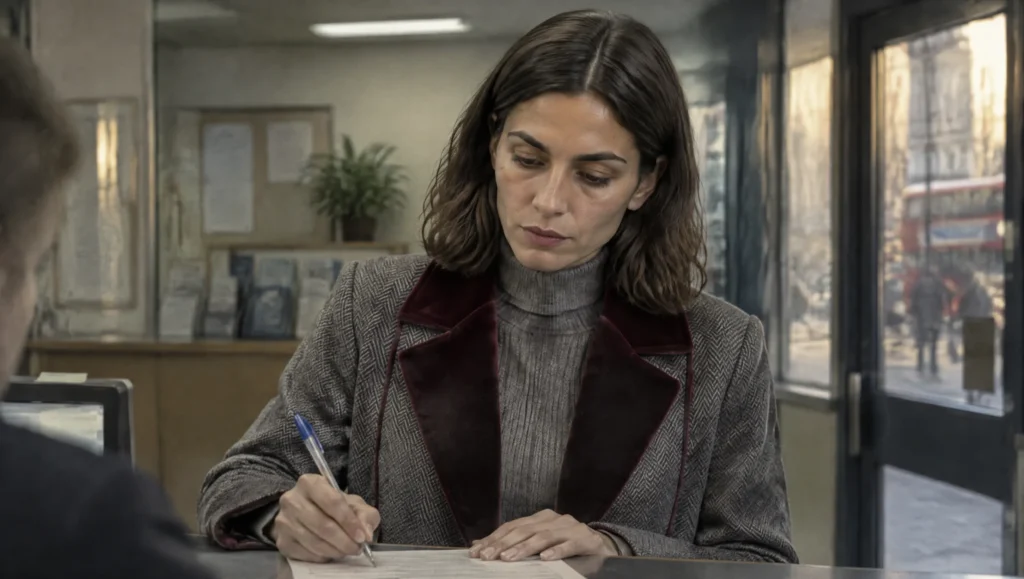
Ordinary world: a woman walks a London street with her daughter, both looking at their phones. Vulnerability: she zips the phone into her bag with care, because it holds every photograph of the last ten years. Separation: a bump on the pavement, a hand she does not feel, and the phone is gone. Escalation: a form at a counter, an insurance policy that covers damage but not theft. Lowest beat: she raises her hand to photograph light between the buildings, and the hand is empty. The turn: her daughter says one word, puts her own phone away, and takes the empty hand. Physical evidence: the hand held, the breath, the laugh that turns. Meaning: the phone stored the memories but was never the memory. Callback: the street again, two figures where there was one.
How Nine Beats Fit Into Fifty Seconds
Nine beats sounds like a feature. It fits into fifty seconds because beats are not scenes. Several beats can live inside one image or one line. For example, the zip on the bag is ordinary world and vulnerability in one shot. Likewise, the empty hand is lowest beat and separation made visible in one frame. The hand taken is the turn and the physical evidence in a single close-up. Meaning and callback share the final wide shot.
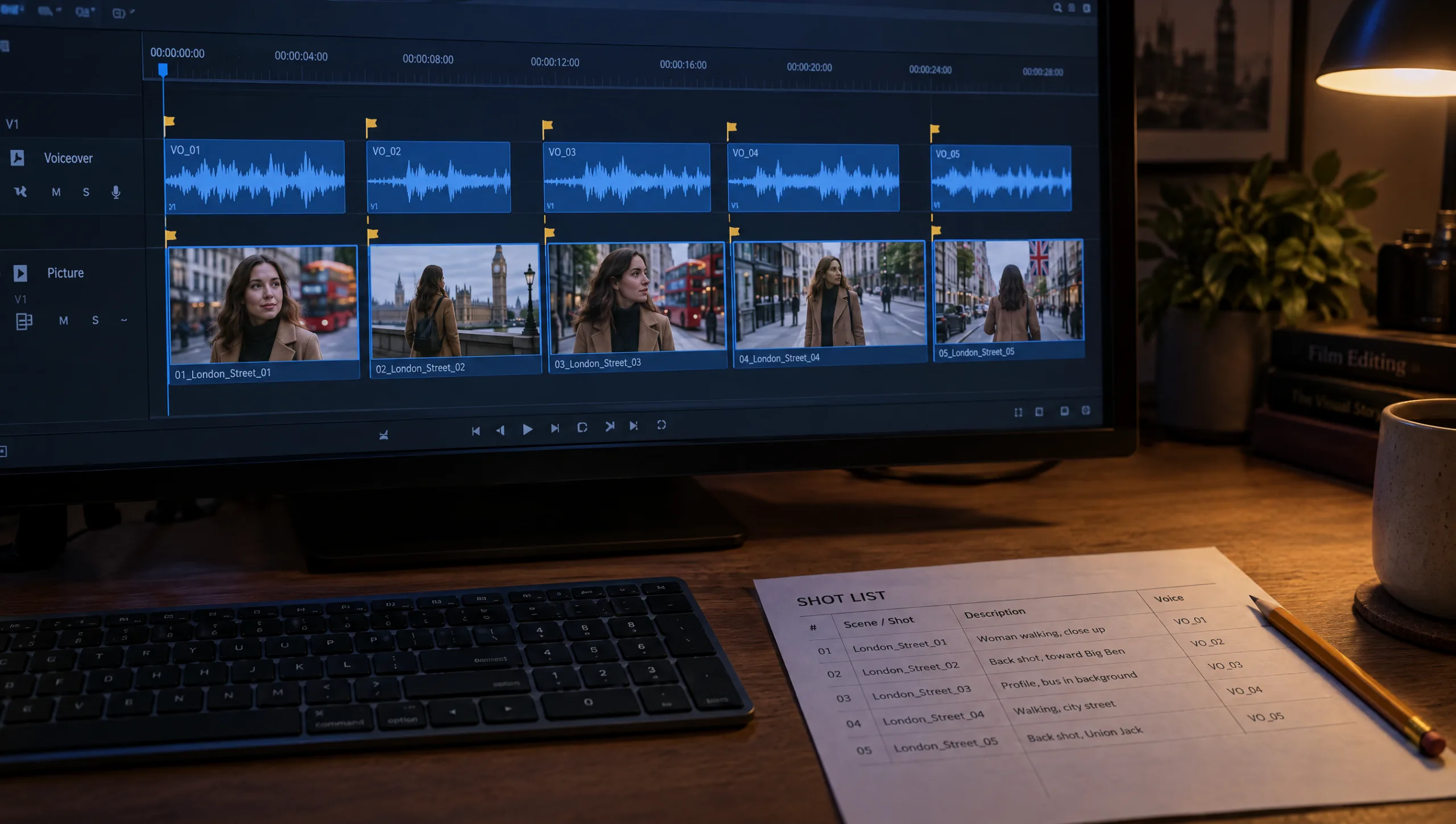
In practice a fifty-second film has five to seven shots and about six lines of voice. The nine beats are a checklist, not a shot list. Every beat must be present somewhere, but most of them will be sharing a frame with a neighbour. That is why the five-beat structure this blog already uses, image, want, obstacle, turn, landing, is the same map folded one more time. how to write a 50-second story for an AI short film builds from those five.

The Word Budget
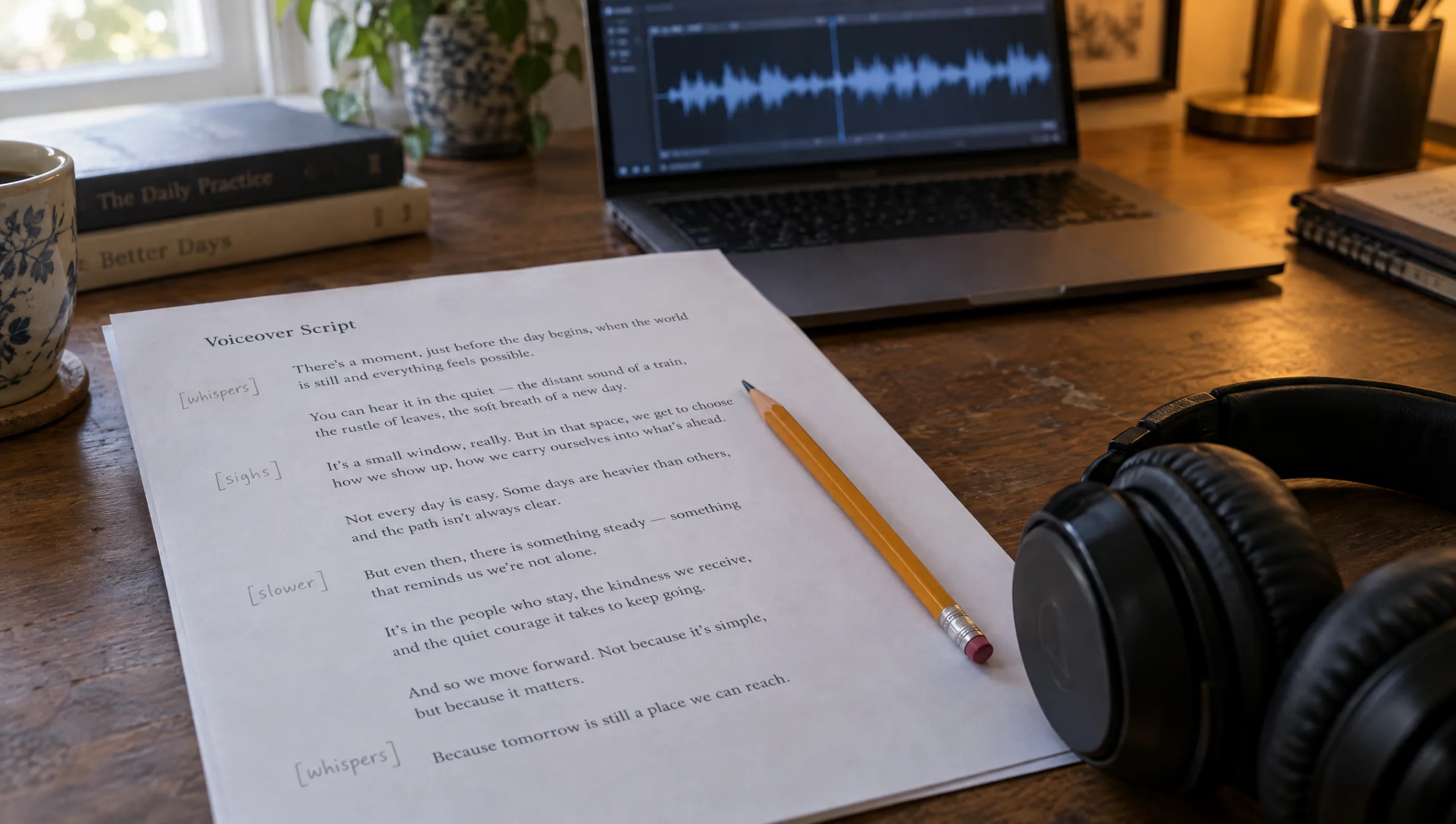
Fifty seconds of intentional delivery is 82 to 88 spoken words. That number is not a style choice. It is the pace at which a voice can be cinematic rather than hurried. It leaves room for the pauses that let the audience feel. The master prompt in the next article enforces it, but it helps to know it now, because the budget shapes the beats.
Roughly, the ordinary world and vulnerability share twenty words. Separation and escalation share twenty-five. The lowest beat gets ten, often fewer, because silence does the work. The turn gets five to eight, often a single spoken word plus the body. Physical evidence gets nothing, because the picture carries it. Meaning and callback share the last fifteen to twenty. If a draft comes back at a hundred and twenty words, the escalation is almost always where the fat is.

Three Prompts for the Map
Prompt 1: The Relationship Sentence
First, the prompt that does the reading for you.
Here is a real event from my life or something I observed: [PASTE THE PLAIN EVENT]. Write the relationship sentence for it in this exact form: "This is a story about [person] and [person], who begin emotionally [state], until [event] suddenly changes the connection between them." Then give me the connection contrast in two words each: the emotional state before, and the emotional state after. If any bracket cannot be filled from the event, say which, and do not invent it.Prompt 2: The Nine-Beat Map
Next, a second pass on the result.
Using this relationship sentence: [PASTE IT], and this plain event: [PASTE IT], lay the story out in nine beats, one line each, as things the audience sees: ordinary world, vulnerability, separation, escalation, lowest beat, kama muta turn, physical evidence, meaning, callback. Then tell me which beats can share a single image, and propose five to seven shots that cover all nine beats. Use only details from the event.Prompt 3: The Fold
Finally, the check that decides whether it is ready.
Here are my nine beats: [PASTE THEM]. Fold them into a fifty-second film with a word budget of 82 to 88 spoken words. Give me the budget per beat, with the lowest beat under ten words and the physical evidence at zero. Then write one plain line of voiceover per beat that has words, keeping the total within budget. No dialogue at the turn beyond a single word. No line that tells the audience what to feel.From the Map to the Script
With the sentence, the nine beats and the budget, the script almost writes itself, and that is the point. The next article hands the map to AI with the master prompt. It returns a clean fifty-second voiceover and the same script marked up for the voice. That is writing a short film script with AI. The whole method on one page is The Art of Kama Muta.
Common mistake
Treating beats as scenes. Nine beats become nine locations, nine generations, nine shots, and a fifty-second film that feels like a trailer. Beats are things the audience must experience, not places the camera must go. Three beats in one frame is normal. Nine frames for nine beats is a feature film with the middle cut out.
A note from Patchy
Quick version
One sentence finds the story. This is a story about someone and someone, who begin emotionally somewhere, until something suddenly changes the connection between them. The story then lays out in nine beats, ordinary world to callback. Nine beats fit fifty seconds because several share one image. The film has five to seven shots and 82 to 88 spoken words. The lowest beat gets almost no words, the physical evidence gets none, and the escalation is where the fat usually hides.
Your move
Run Prompt 1 on your plain event tonight and write the two words of the connection contrast on a card. If the last bracket would not fill, go back to part 1 and find a moment that changes. If it did fill, run Prompt 2, and you have your map.
Get the prompts. All three prompts from this article are in the free Prompt Library under Story.
Related articles
- The Art of Kama Muta, the pillar guide
- how to write a 50-second story for an AI short film
- turning a script into a shot list for AI video
- fitting an AI voiceover to a fifty-second film
Paid next step: The Kama Muta Storytelling Masterclass. It includes the nine-beat workbook, the word budget worksheet and three case studies mapped beat by beat.
Frequently Asked Questions
What is the relationship sentence?
One sentence in a fixed shape: this is a story about [person] and [person], who begin emotionally [state], until [event] suddenly changes the connection between them. If every bracket fills from a real event, you have a film.
How many beats does a fifty-second film need?
All nine, but not as nine shots. Several beats share one image, so the film usually has five to seven shots and about six lines of voice.
How many words is a fifty-second voiceover?
82 to 88 spoken words, delivered with intention and room for pauses. More than that and the voice hurries and the feeling has no space.
Where do most scripts run long?
In the escalation. The obstacle gets explained instead of shown. Cut there first.






Read the Comments +