AI FILMMAKING · THE ART OF KAMA MUTA, PART 8
An empty street at golden hour and a woman so small in it that you could cover her with your thumb. Forty seconds later the frame holds nothing but two hands. Nothing in between was explained. The camera simply came closer, one step at a time. By the time it reached the hands you had already felt the distance close. That is the whole grammar of a film built to move people, and it is the subject of this article. Every shot size from extreme wide to extreme close-up has an emotional job. Laid along the arc in order, they walk the audience from separation to connection without a word.
At a glance
- The camera tells the relationship. Start wide when people are emotionally separate and come closer as connection intensifies.
- Each shot size has an emotional job. Extreme wide and wide for isolation, full and cowboy for the ordinary world, medium and medium close-up for tension. Then close-up for the turn, extreme close-up of hands for the evidence, and callback wide for the end.
- Hands carry meaning without dialogue: hesitation, reaching, holding, releasing.
- Thresholds, doors, windows and tables show separation before reunion. An object held in the opening returns in the callback.
- The twelve-frame ladder below is the method shown on one story, and it is the shot list for a fifty-second film.
You will need: your nine beats from part 5 and your character sheet from part 7.
The Camera Tells the Relationship
To begin with, the rule is simple enough to write on a card. Distance between the camera and the people is distance between the people. When the audience should feel that two people are apart, the frame is wide and they are small. When the audience should feel them come together, the frame is close and nothing else fits in it. The ladder from one to the other is the arc of the film. Each emotional station from the emotional arc of a short film has a shot size that carries it best.
This is therefore why a film that opens on a close-up has nowhere to go, and why a film that stays wide never lands. The sizes are not a menu. Instead, they are a sequence, and the sequence is the story.
The Twelve-Frame Ladder
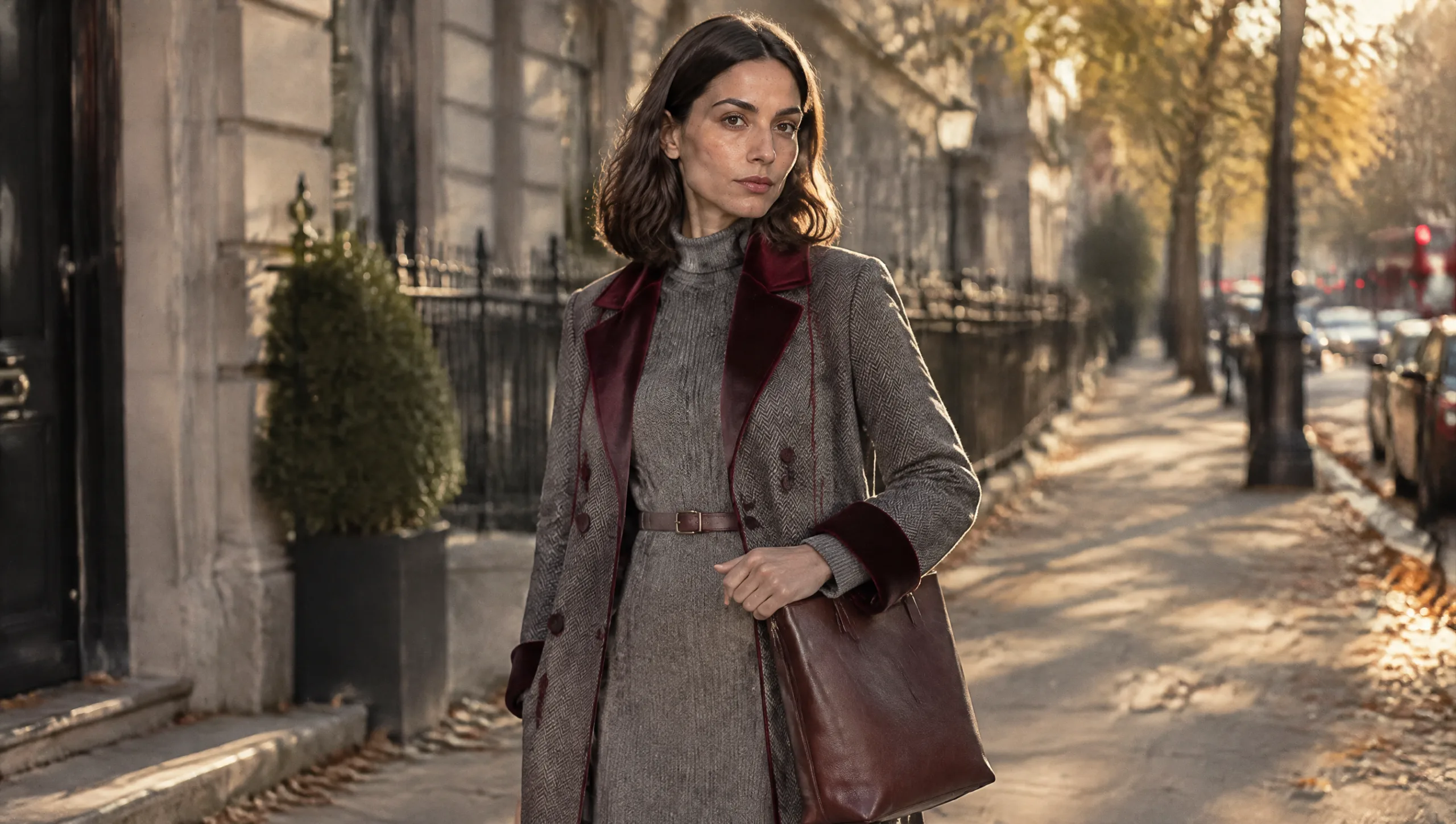
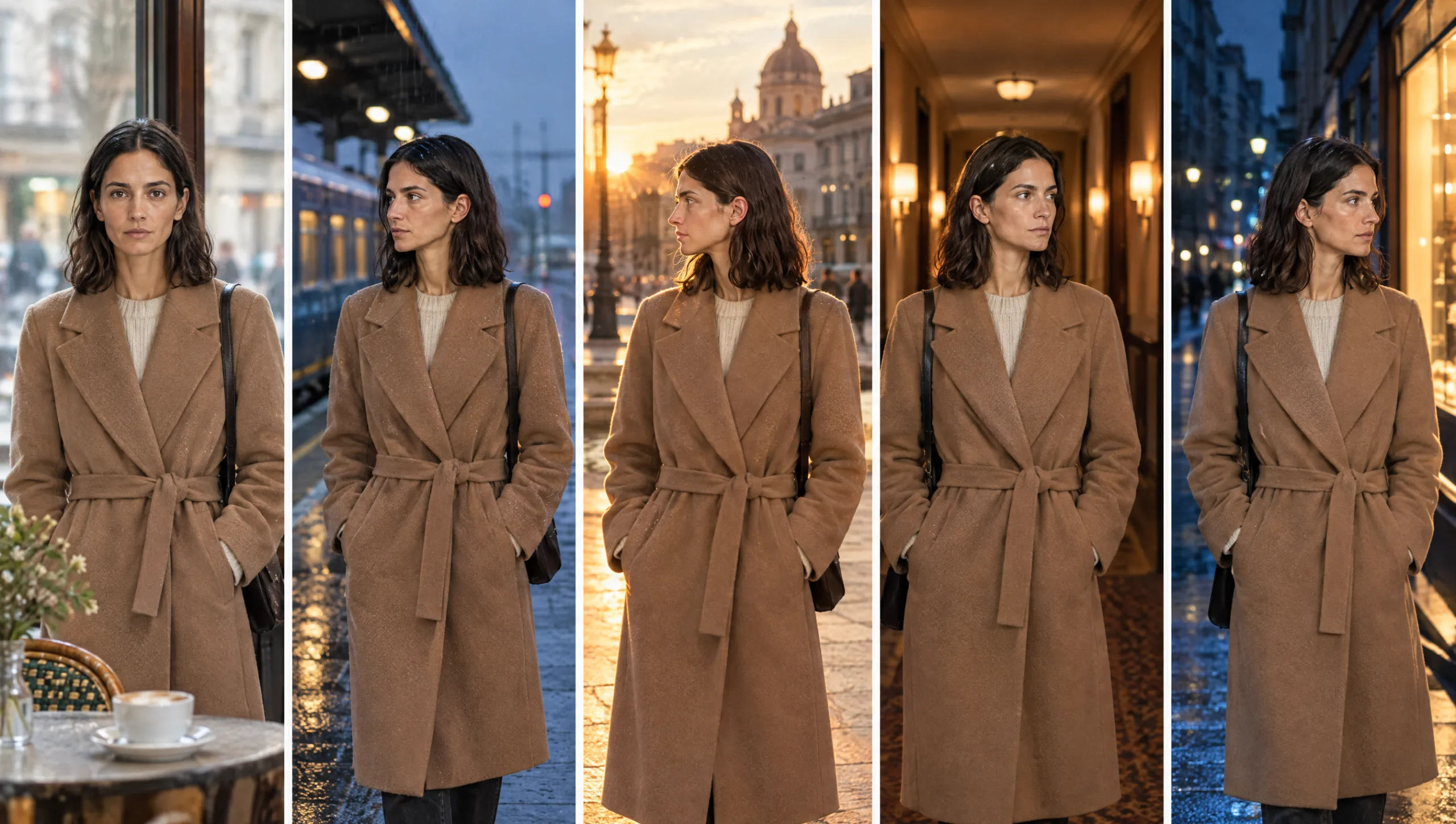
Here is the phone story shot as a ladder, one frame per rung. Each has the shot size and the emotional job it does. Every frame is Mara in the wardrobe built in part 7, on the same London street, in the same late-afternoon light. So the only thing that changes from rung to rung is the distance.
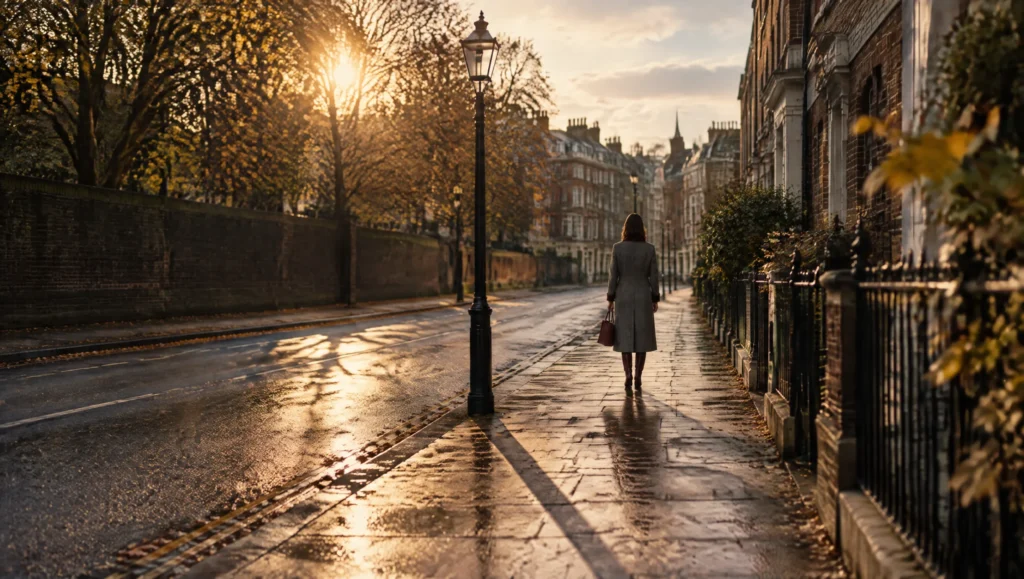
Extreme Wide Shot: Distance
The street is almost empty and she is a small figure far down it, walking away. In other words, the extreme wide is the shot of isolation. It says a person is alone in a place that does not notice her. Open here, and the audience has a distance to feel.
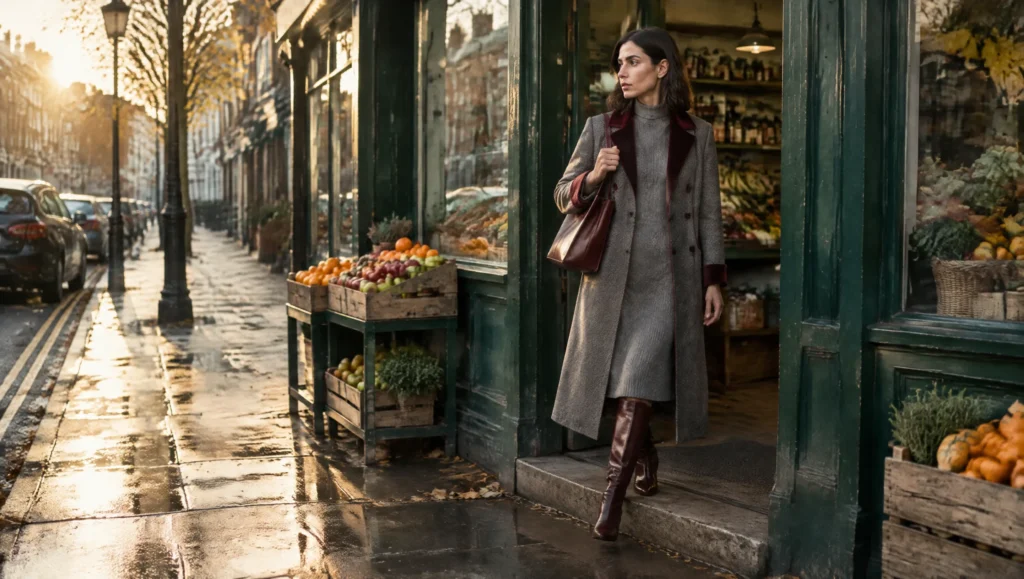
Wide Shot: The Ordinary World
She stands at the door of a corner shop with her bag, the whole shopfront around her. Here, the wide shot places a person in their world without yet asking the audience to care about her face. It is the establishing shot of the ordinary world, before anything is lost.
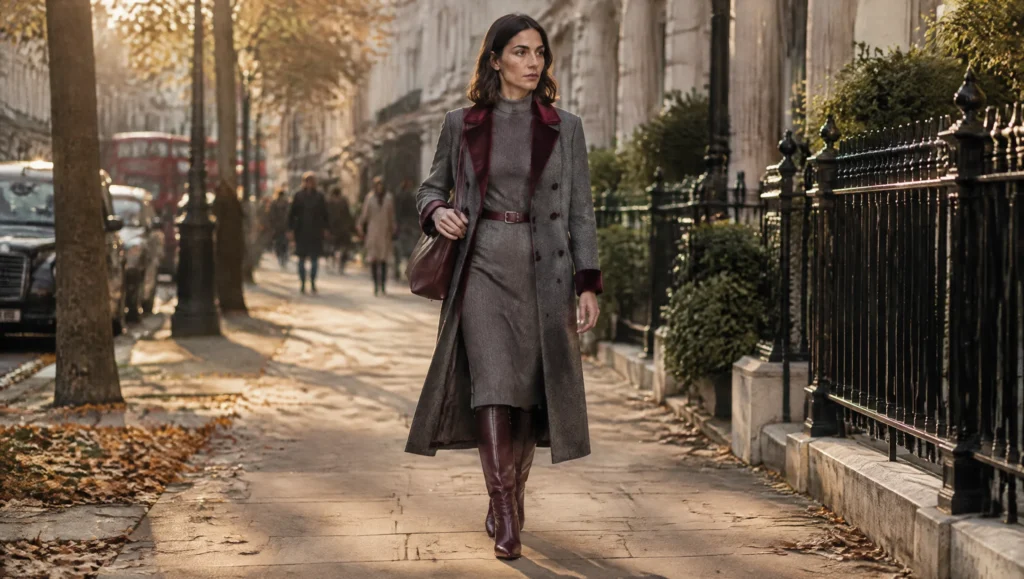
Full Shot: Calm and Unaware
Head to toe, walking towards us, one hand resting on the bag. The full shot shows the body and the walk, which is where calm and unawareness live, before anything goes wrong. The audience reads her as fine, which is exactly what the next rungs will take away.
Cowboy Shot: The Hand on the Bag
From mid-thigh up, her hand on the zip of the bag. The cowboy shot takes its name from westerns that needed the holster in frame. It is the size that shows a hand and an object together with the face. In short, it is the vulnerability shot. Here it says: this is what she protects.
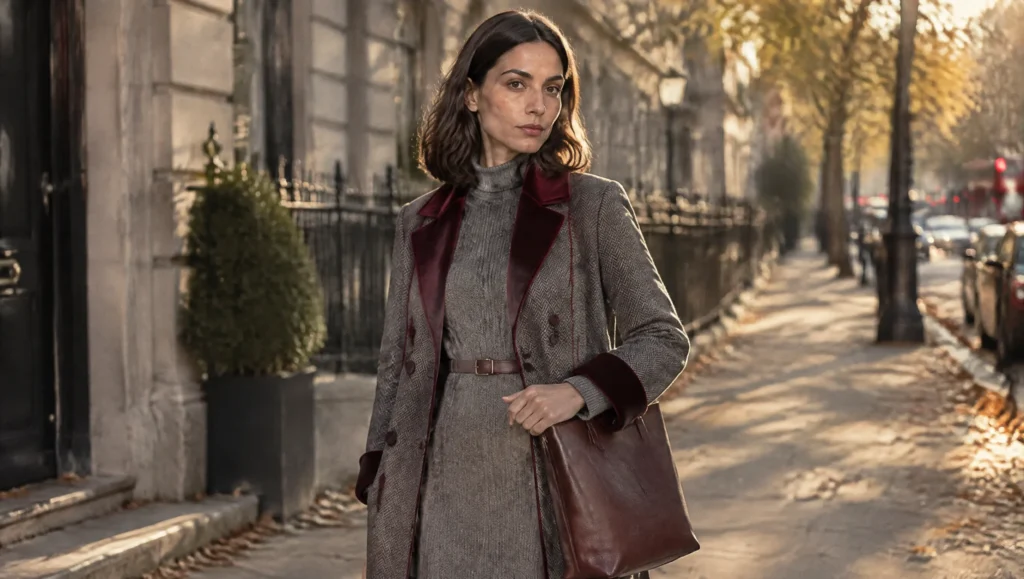
Medium Shot: The Bump
Waist up. A blur leaves the frame and she turns her head sharply. The medium shot is where tension begins. It is close enough to read a reaction and wide enough to show what caused it. The separation happens here, and the audience sees it before she understands it.
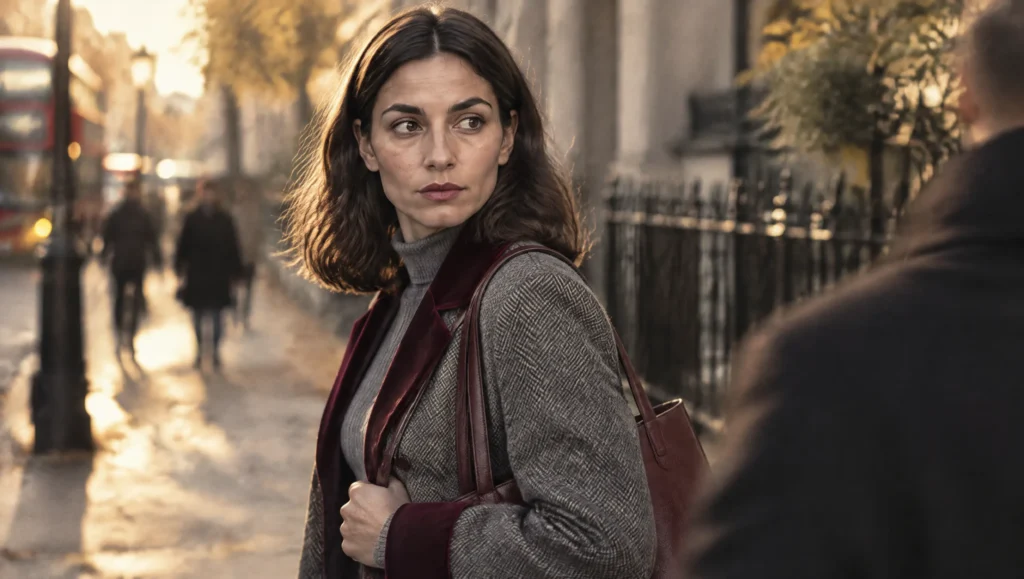
Medium Close-Up: The Form
Chest up, at a counter, filling in a form under flat light. Next, the medium close-up carries escalation. It is close enough that the audience sits with her. The flat light and the paper say the obstacle without a word about insurance.
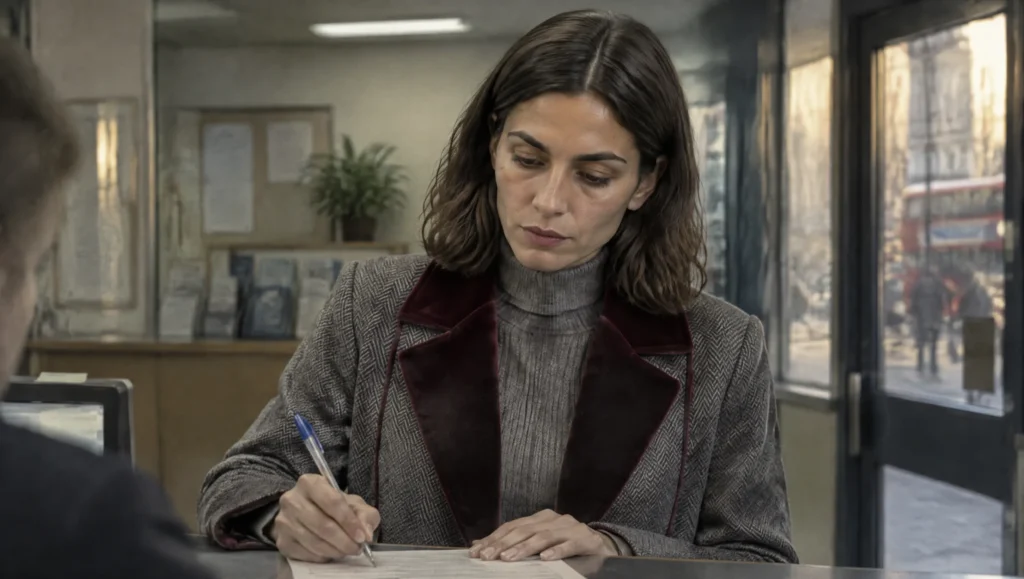
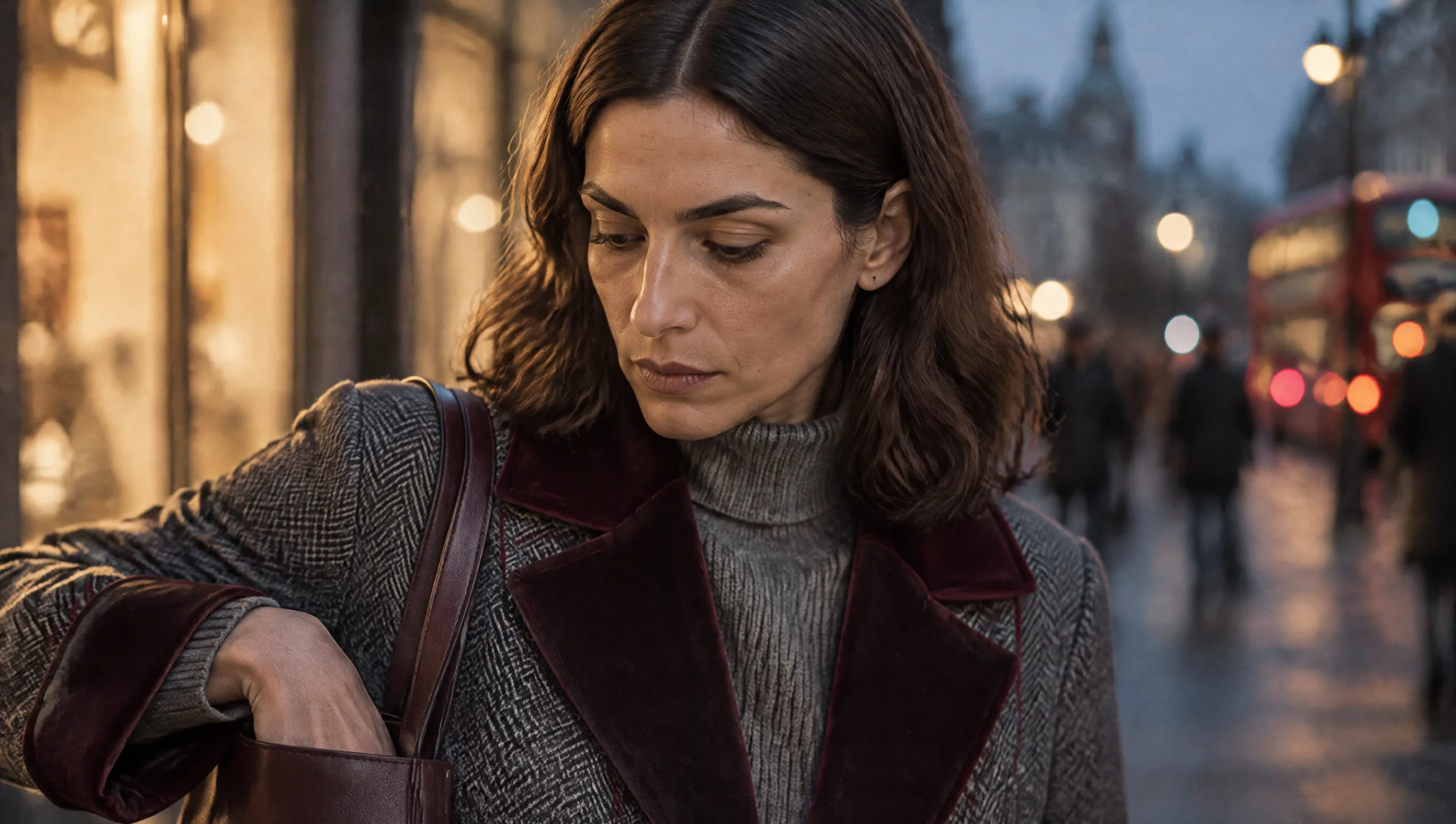
Close-Up: Reaching for Nothing
Head and shoulders, dusk, as she reaches for a phone that is not there and realises. The close-up is the shot of the lowest beat and the shot of the turn. It is the size at which a face changes in real time. Here the face drops. A few rungs later, on a different face, it will lift again.
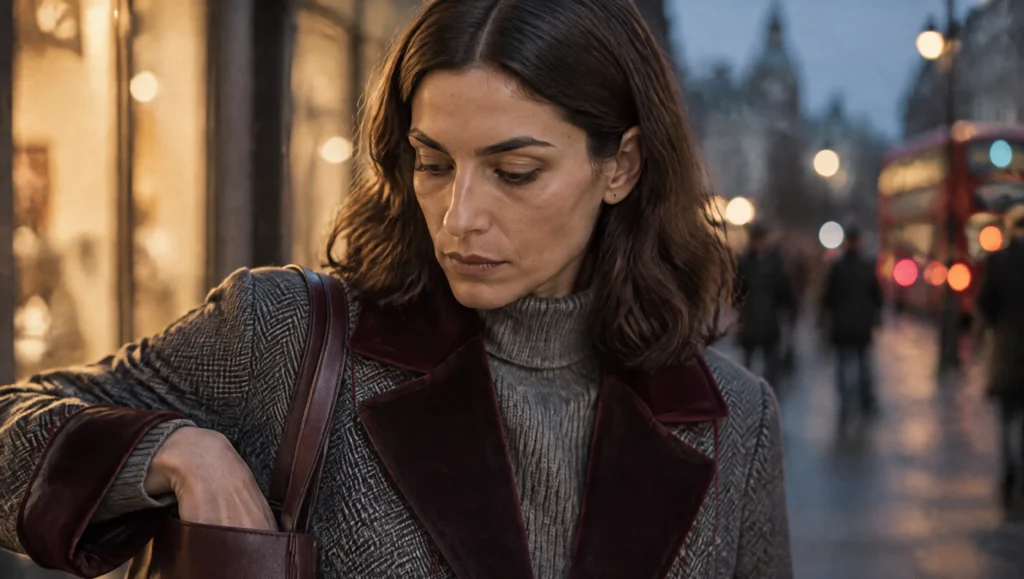
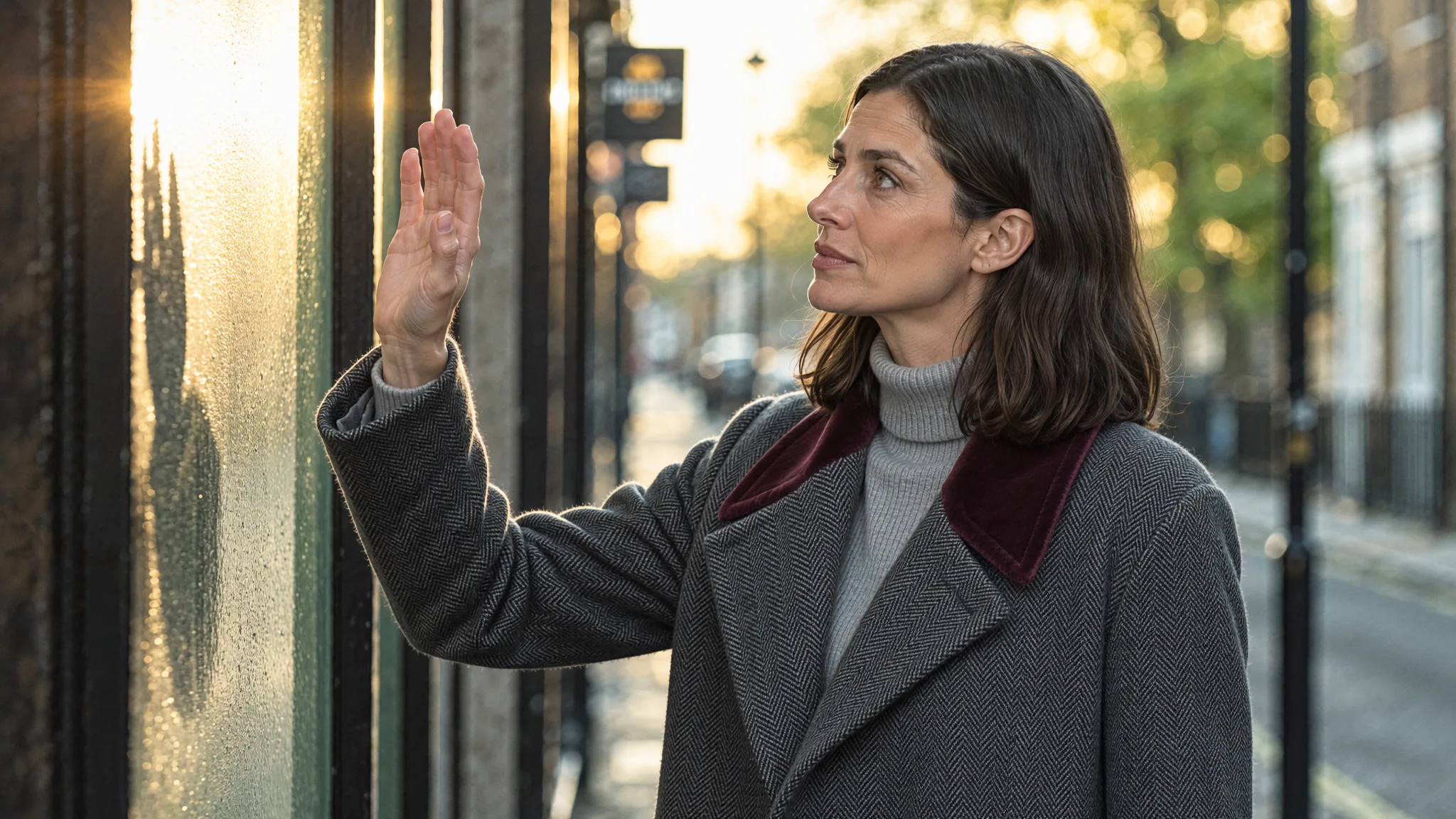
Extreme Close-Up: The Empty Hand
A hand rising into golden light between buildings, and the hand is empty. Then the extreme close-up removes the face and leaves the body sign. It is the lowest beat made physical. No dialogue could do what this frame does. That is why the lowest beat gets almost no words in the budget from part 5.
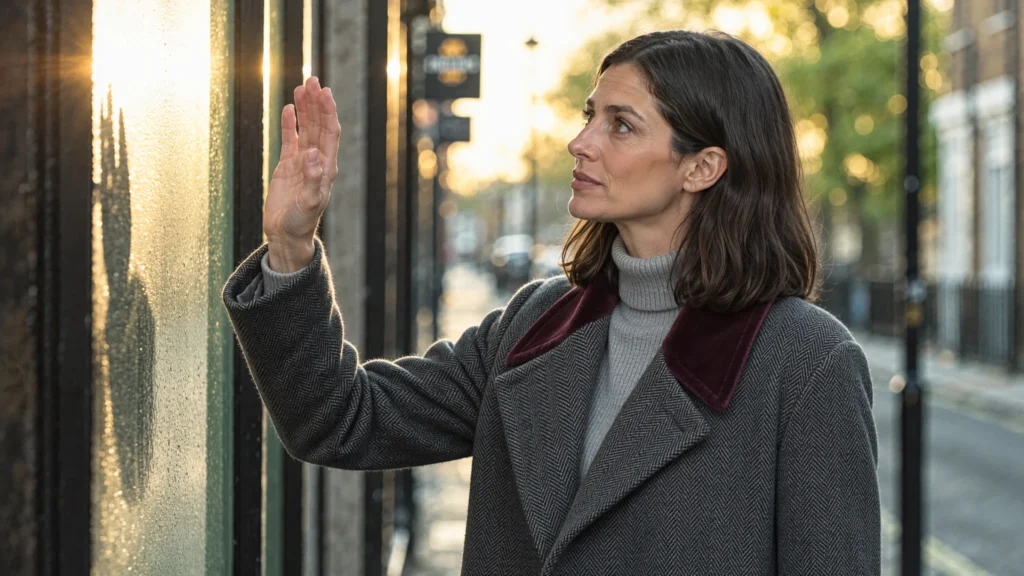
Over the Shoulder: “Mum”
The back of a younger head and shoulder in soft focus, and beyond it the mother turning, surprised, eyes just beginning to soften. The over-the-shoulder, in particular, is the recognition shot. It puts the audience inside the daughter’s approach and lets them see the mother see her. This is the half-second most beginners cut.
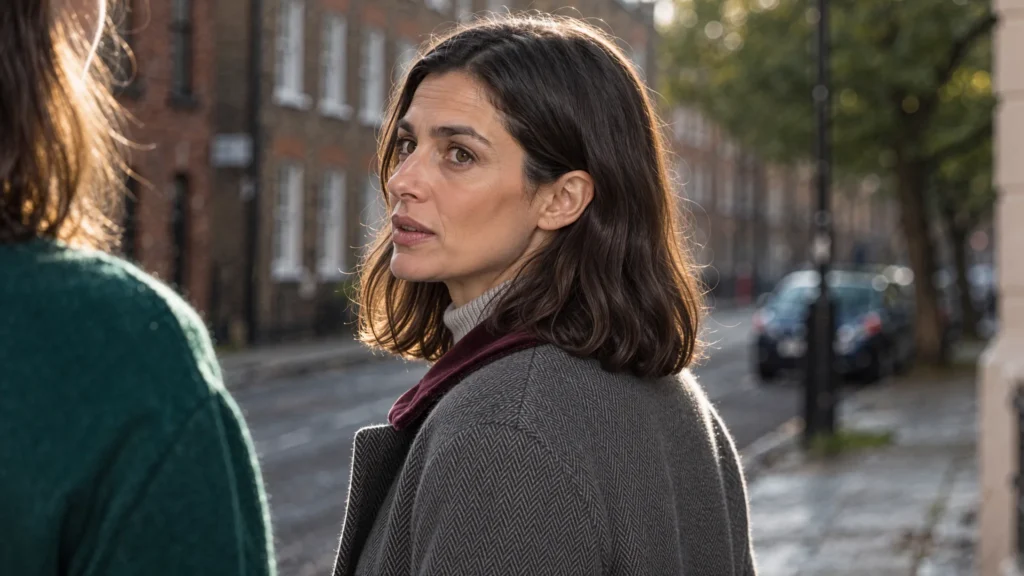
Close Two-Shot: The Turn
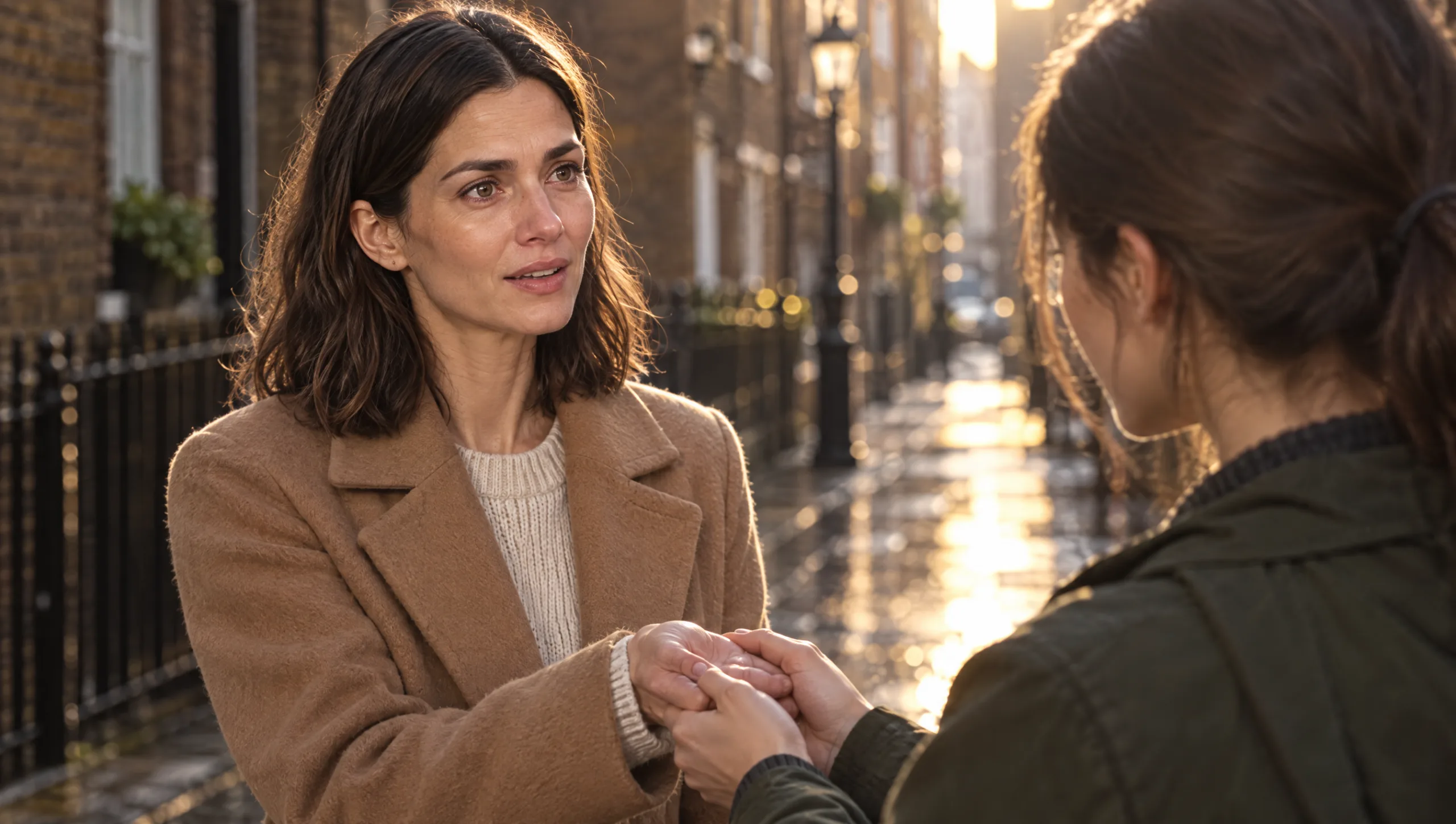
Now the daughter has taken her hand and is pulling her into an embrace. The mother’s face is over her shoulder, laughing and about to cry. The close two-shot is the kama muta moment. Two people fill the frame and nothing else fits, because nothing else matters. It is the closest the camera has been to anyone, which is the point.
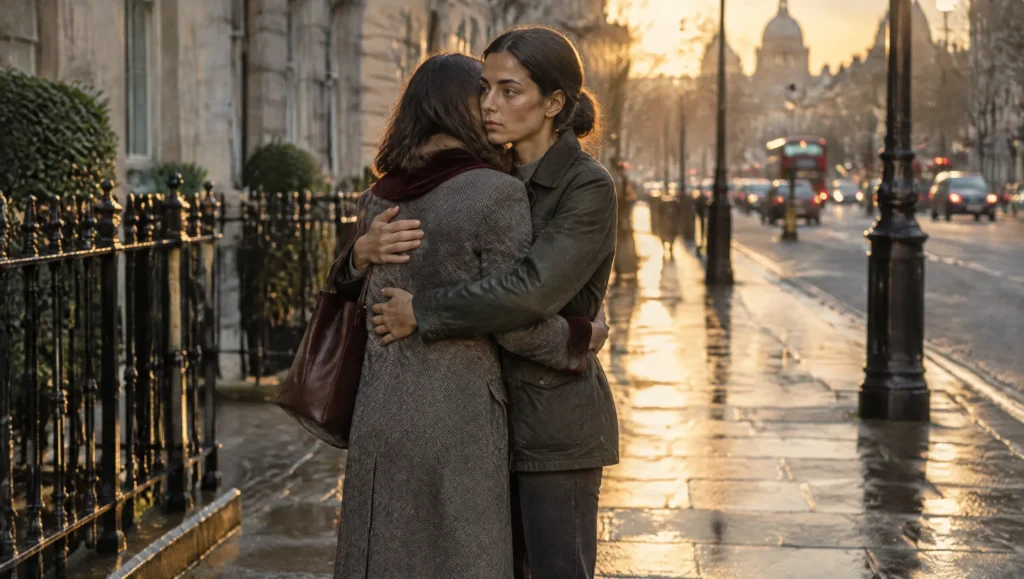
Extreme Close-Up: Two Hands
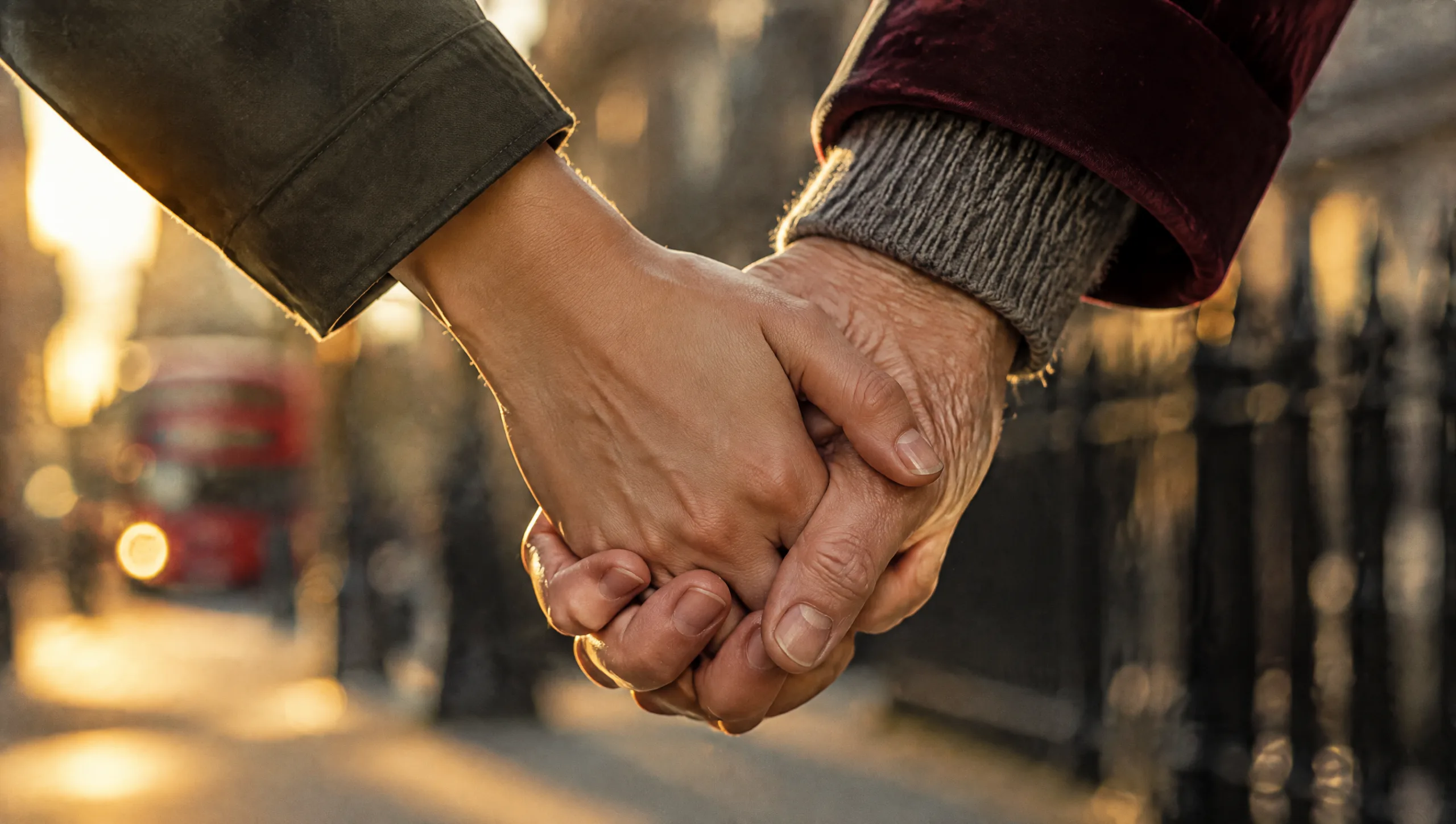
Fingers interlaced in low sun, a green sleeve and a grey cuff. Finally, the extreme close-up returns, but now there are two hands in it. The same size that showed the empty hand shows the held one, and the audience feels the rhyme without being told. This is the physical evidence.
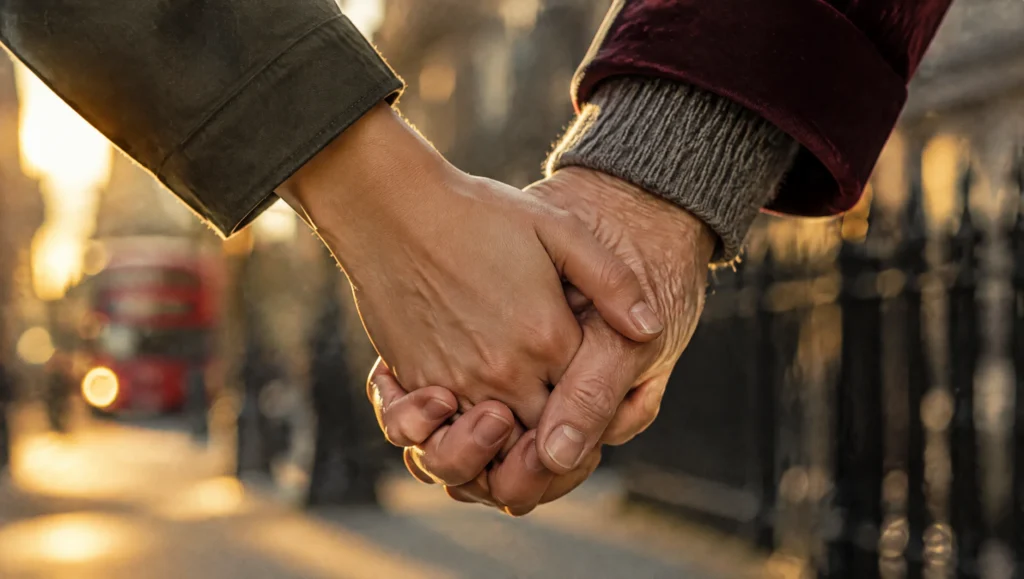
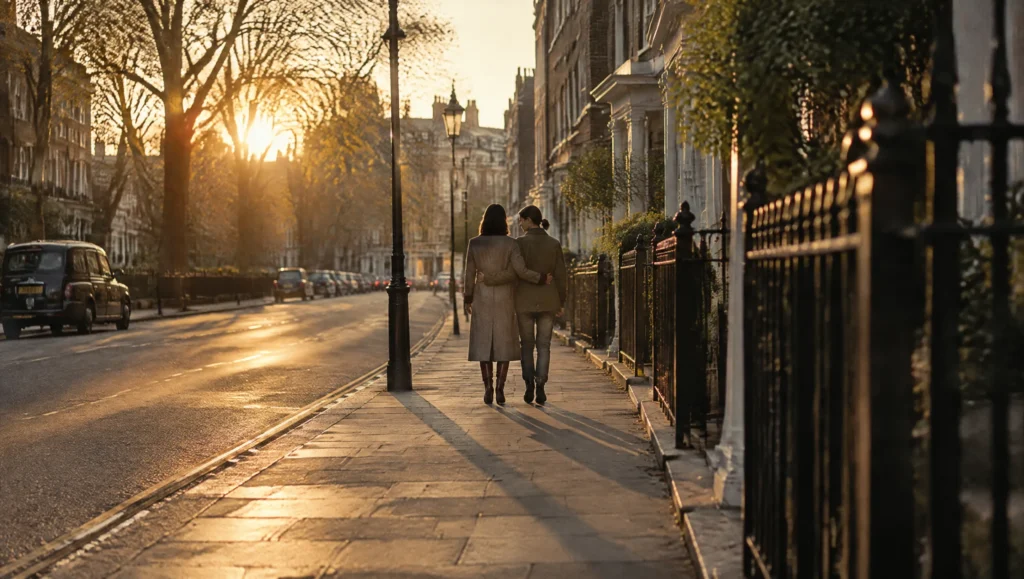
Callback Wide: Together
The same street as the first frame, the same light, and two small figures walking away arm in arm where there was one. At last, the callback wide closes the ladder by returning to the opening size with the distance closed. It is meaning and callback in a single frame, and it needs no line of voice at all.
Hands, Thresholds and Objects
Three things carry meaning in this grammar without dialogue, and all three appear in the ladder.
Hands first, because they are the most honest part of a body on screen. Hesitation, reaching, holding, releasing. A hand on a zip is protection. One raised and empty is loss. One taken is connection. If you are ever unsure what to put in the frame at an emotional beat, put the hands in it.
Thresholds second. For instance, doors, windows, tables, counters, the edge of a pavement. A threshold shows separation before reunion, because it puts something between two people that one of them will cross. The shop door and the counter are thresholds in the ladder. The embrace happens after the last one is crossed.
Objects third. An object held in the opening returns in the callback, and the audience notices even when they cannot say why. For example, the bag is in the cowboy shot, and it is still on her shoulder in the callback wide. The hand that rested on it, however, is now holding someone else’s. The audience does not need to be told that.
Three Prompts for the Camera
Prompt 1: The Ladder From Your Beats
To begin with, run this on the material you already have.
Here are my nine beats: [PASTE THEM]. Assign each beat a shot size from this ladder and explain the emotional job in one line: extreme wide for distance, wide for the ordinary world, full for calm, cowboy for a hand and an object, medium for tension, medium close-up for escalation, close-up for the lowest beat, extreme close-up for the body sign, over the shoulder for recognition, close two-shot for the turn, extreme close-up for the evidence, callback wide for the end. Merge beats that share a frame. Give me a final list of five to seven shots in order, each with size, what is in frame, and what the hands are doing.Prompt 2: The Shot Prompt
Then, once the first answer exists, go one step further.
Write an image generation prompt for this shot: [PASTE ONE SHOT FROM THE LIST]. Include: the shot size by name and the framing it implies; the character's locked wardrobe pasted exactly; the location and time of day shared with every other shot; what the hands are doing; where the threshold or object is; and the emotional state as something visible on the body, never as a feeling named. Add a cinematic look line: anamorphic framing, late-afternoon light, muted film palette, fine grain. No text, no captions.Prompt 3: The Distance Check
Last of all, the one that catches what the others miss.
Here is my shot list in order: [PASTE IT]. Check that the camera moves from distance to closeness with the story: wide at separation, closest at the turn, and back to the opening size at the callback. Flag any shot that is closer than the beat deserves, any close-up that comes before the lowest beat, and any emotional beat without hands in frame. Suggest one change per flag.From the Camera to the Voice
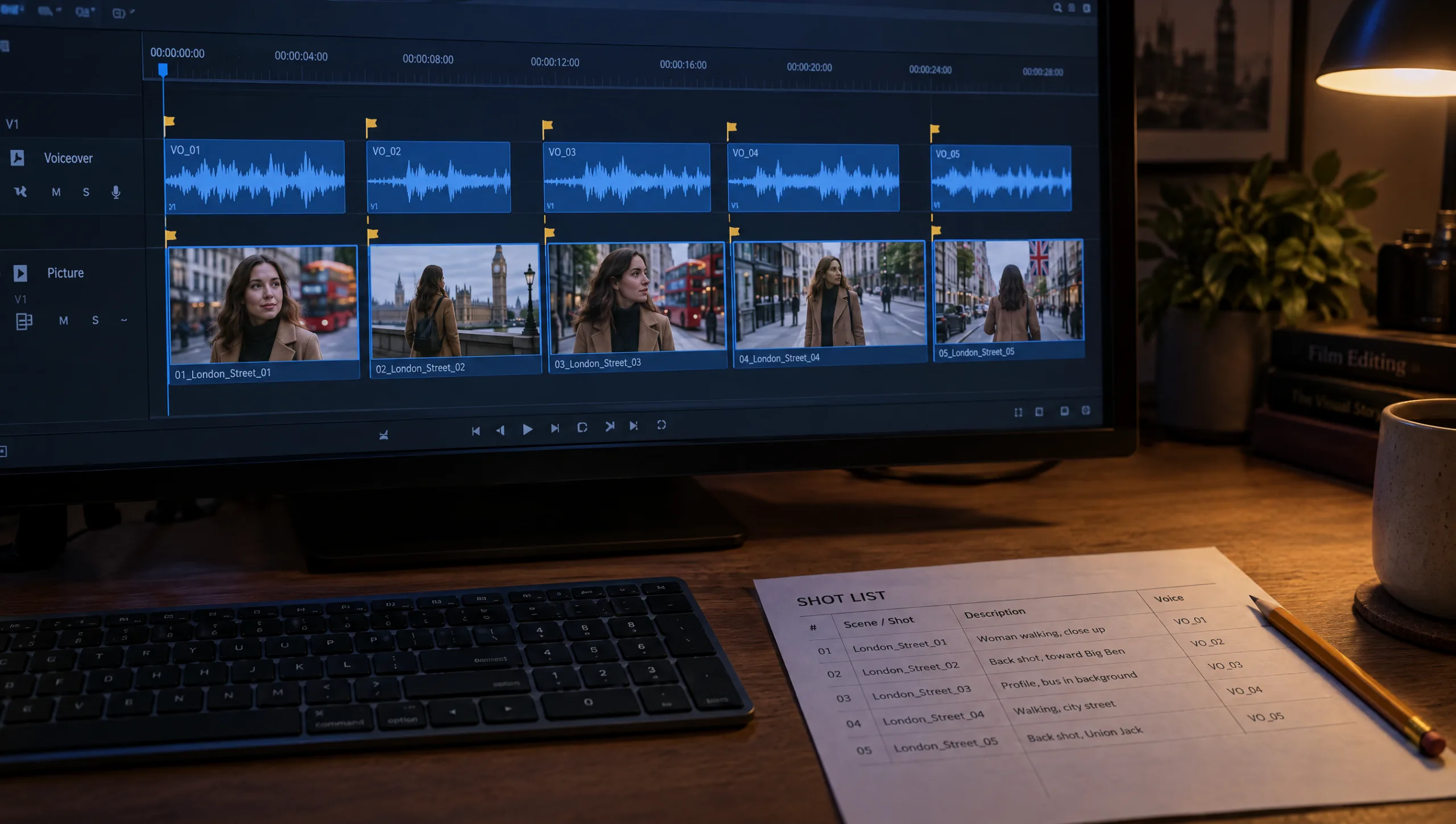
The ladder gives the pictures, but not the sound. The voice walks the same arc at the same pace. The final article in the series is about directing it with restraint, then auditing the whole film for emotional honesty. That is emotional voiceover without melodrama. For the mechanics of turning this list into generations, turning a script into a shot list for AI video has the twelve-column template. The whole method on one page is The Art of Kama Muta.
Common mistake
Opening on the close-up. The face is beautiful, the sheet is strong, so the film opens tight. The audience is given closeness before they have felt any distance, and the turn, when it comes, has nowhere to go. Open wide instead. Earn the close-up.
A note from Patchy
Quick version
The camera tells the relationship: wide when people are apart, close when they connect, and the ladder between is the film. Extreme wide and wide for isolation, full and cowboy for the ordinary world and the vulnerability. Medium and medium close-up for tension and escalation, close-up for the lowest beat, extreme close-up for the body sign. Over the shoulder for recognition, close two-shot for the turn, extreme close-up for the evidence, callback wide for the end. Hands, thresholds and objects carry meaning without dialogue.
Your move
Run Prompt 1 on your nine beats and look at the result as a ladder. If the closest shot is not the turn, move it. If the first shot is not wide, move it. Then run Prompt 2 on the lowest beat only, generate it, and see whether the body says what the words would have.
Get the prompts. All three prompts from this article are in the free Prompt Library under Scenes.
Related articles
- The Art of Kama Muta, the pillar guide
- turning a script into a shot list for AI video
- writing AI scene prompts with the scene formula
- keeping AI lighting consistent across a scene
Paid next step: The 50 Second Story Builder, which carries the ladder as a shot list template with the sizes pre-filled.
Frequently Asked Questions
Which shot size is most emotional?
The close-up, because it is the size at which a face changes in real time. But it only works if the film has earned it by starting wide. The most moving frame in a film built for connection is often the over-the-shoulder recognition just before the turn.
What is a cowboy shot used for?
Framing from mid-thigh up, so a hand and an object are in frame with the face. It is the shot for showing what a character protects or carries, which makes it the vulnerability shot in this grammar.
How should the camera move in an emotional short film?
From distance to closeness, in step with the story. Wide at separation, closest at the turn, and back to the opening size at the callback with the distance closed.
Why do hands matter so much in short films?
Because they carry meaning without dialogue. Reaching, holding and releasing are the body signs of connection, and the extreme close-up of two hands is the physical evidence of the turn.


Read the Comments +