
STORYTELLING AND SCRIPTS · THE ART OF KAMA MUTA, PART 2
A man stands in an arrivals hall holding a piece of cardboard with a name on it. He has been standing there for an hour. Nobody has told him the flight is late. Then the doors open. A girl of about six comes through them at a run, faster than the adult behind her can manage. She does not stop until she hits his knees. He drops the sign. You have seen a hundred versions of this and it works every time. It worked on the people who first told stories around fires, long before anyone gave the feeling a name. This article is about how storytellers have always built for it, so that you can build for it on purpose.
At a glance
- Every culture loves the same story most. Someone overcomes every obstacle to reach the person they belong to.
- Weddings, homecomings, anthems, memorials, lullabies and the films we send to each other all exist to produce the same surge of closeness.
- The shape is four moves. Open a distance, hold it until it hurts, close it suddenly in one visible act, then let the body register it before anyone explains.
- The great quiet films share three things: a real relationship, a long distance, and a turn that happens in silence.
- Once you can see the shape, you can build it into fifty seconds.
You will need: two or three films or scenes that have moved you. Then the willingness to look at them again with the mechanism in mind.
The Oldest Story in the World
Strip the surface from the stories that last and the same shape is underneath. Someone is separated from the person they belong to. The separation is long, or it seems final. They cross a sea, or a war, or twenty years, or their own pride. Then the door opens. The Odyssey is this story. So is the parable of the prodigal son. So is the fairy tale where a sister spins nettles into shirts to bring her brothers back. Nearly every romantic comedy follows it, along with every sports film with a father in the stands. So does every short film that gets sent around with the message “watch this”.
This is not a coincidence. The researchers who named kama muta argue that cultural practices evolve to produce it. The feeling binds people together, and bound people survive. Stories that produce it get retold. Stories that do not, fade. Consequently, the story shape that survived ten thousand years of retelling is the one that produces the feeling most reliably. We did not invent it. We inherited it.
The Practices Every Culture Built
Look past stories and you find the same engine in almost every ritual that matters to people. A wedding is two families suddenly becoming one, with vows said aloud so the increase in closeness is witnessed. Homecomings are distance closed in public. The national anthem, sung by a crowd, makes a huge, abstract bond vivid for three minutes. A memorial makes a bond that death interrupted suddenly present again. A lullaby closes the distance between a parent and a child who is about to be alone in the dark.
Religious practices use it constantly: the prodigal welcomed home, the shepherd who leaves the ninety-nine, the embrace at the end of a pilgrimage. So does advertising, which is why the Christmas adverts that people cry at are never about products. They are about a grandfather and a grandchild, a distance, and a door. Even the cute animal video is a tiny reunion: the dog who waits, the cat who comes back. Every one of these is a practice built around one trigger, and that trigger is the one explained in what kama muta means.
The Shape in Four Moves
For a filmmaker the useful thing is not the history but the shape, and the shape has four moves.
Open a Distance
The audience must feel that two people who belong together are apart. The distance can be physical, a sea or a street. It can be emotional, two people in the same room looking at different screens. It can be a misunderstanding, a grudge, a silence that has gone on too long. The important thing is that the audience cares about the bond before it sees the gap. A distance between strangers is just geography.

Hold It Until It Hurts
Then you wait. The arrivals hall scene works because the man has stood there an hour. The homecoming video works because the deployment was nine months. In a fifty-second film you have perhaps twenty seconds to make the distance ache. You do it with detail, not with time. The coat still on the hook, the second plate laid out of habit, the phone that stays dark.
Close It Suddenly, in One Act
The turn must be sudden and it must be visible. A door opens. A hand is taken. Someone says one word. The audience needs to see the exact instant the distance collapses, because that instant is what triggers the feeling in their body. A slow reconciliation over several scenes produces warmth, which is pleasant, but it does not produce the surge.

Let the Body Speak First
After the turn, the worst thing you can do is explain. Instead, show the body. The sign dropped on the floor, the breath that catches, the laugh that turns into tears. The audience is already feeling it. Give them two seconds of silence to notice. Then end.
What the Great Quiet Films Share
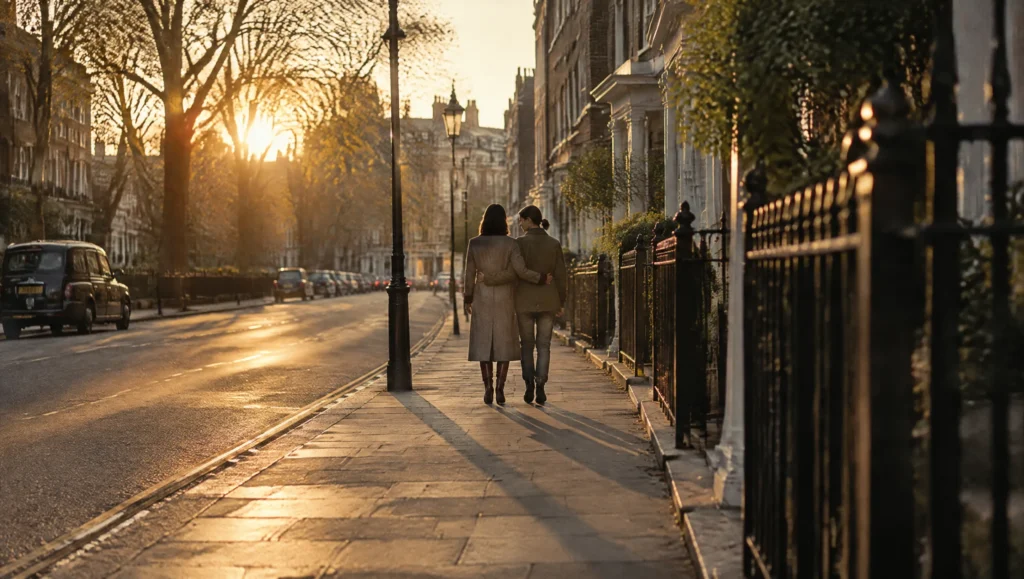
Think of the short films that have stayed with you, the ones with no explosions and no twist, that you still think about. Most of them share three things.
First, a real relationship, which usually means a specific one. Not “a mother and a son” but this mother and this son, with a detail that could only be theirs. Second, a long distance, held with patience. The filmmaker trusted the audience to sit in the gap and did not rush to fill it. Third, a turn that happens in silence, or close to it. The one word, the hand, the look. Dialogue at the turn almost always weakens it, because words explain and the feeling does not want explaining.
Notice what is not on the list. Beautiful cinematography is absent, though it helps. So is a clever idea, and so is a twist. The films that move people are structurally simple and emotionally specific. AI makes that combination easy to get wrong, because the tools reward beautiful and clever over simple and specific.
Three Prompts to See the Shape
Prompt 1: The Pattern Reader
First, the prompt that does the reading for you.
Here is a short description of a film, scene or story that moved me: [DESCRIBE IT]. Find the separation-and-reunion shape inside it. Answer in four lines: who belongs together, what the distance is, what the single visible act is that closes it, and what the body does afterwards instead of explaining. If the story does not fit the shape, tell me what it is doing instead.Prompt 2: The Practice Finder
Next, a second pass on the result.
List eight rituals, customs or everyday practices from the culture I grew up in that exist to make people feel suddenly closer: weddings, homecomings, songs, meals, greetings, anything. For each one, name the bond and the moment of sudden closeness in one line. I am looking for raw material for a fifty-second film, so prefer small, specific practices over famous ones. My culture: [DESCRIBE].Prompt 3: The Four-Move Test
Finally, the check that decides whether it is ready.
Here is my film idea in plain language: [PASTE IT]. Test it against four moves: does it open a distance between people the audience will care about; does it hold the distance long enough to ache; does it close the distance suddenly in one visible act; and does it let the body speak before anyone explains? Answer each with yes or no and one line of evidence. Then tell me which move is weakest and one way to fix it without adding dialogue.From the Oldest Story to Fifty Seconds
The shape does not change with length. A fifty-second film is the oldest story with everything removed except the four moves. Twenty seconds of distance, held with detail. Five seconds of turn. A few seconds for the body, then the callback. Why story comes before the script explains why this shape has to be in place before any tool is opened, and the emotional arc of a short film walks the feelings the film must travel through. The pillar, The Art of Kama Muta, holds the whole method on one page.
Common mistake
Starting at the turn. Many first films open on the embrace, because that is the moment the filmmaker loves. Without the distance in front of it, the embrace is just two people hugging. The feeling lives in the gap closing, so the gap has to come first and it has to be felt.
A note from Patchy
Quick version
Every culture’s most loved story is separation and reunion, and every culture built rituals to produce the same surge of closeness. The shape is four moves. Open a distance between people the audience cares about, hold it until it aches, close it suddenly in one visible act, and let the body register it before anyone explains. The quiet films that last share a real relationship, a long distance and a silent turn. A fifty-second film is the same shape with everything else removed.
Your move
Pick one film or scene that moved you. Run Prompt 1 on it and find the four moves. Then take the moment you found in part 1 and run Prompt 3. The move that comes back weakest is the one to work on before you write a word of script.
Get the prompts. All three prompts from this article are in the free Prompt Library under Story.
Related articles
- The Art of Kama Muta, the pillar guide
- how to write a 50-second story for an AI short film
- turning a script into a shot list for AI video
Paid next step: The Kama Muta Storytelling Masterclass, which takes the four moves into nine beats, three case studies and a seven-day practice.
Frequently Asked Questions
What is the oldest story structure?
Separation and reunion: someone overcomes every obstacle to be reunited with the person they belong to. It appears in epics, scripture, fairy tales, and most of the short films people share.
Why do weddings and homecomings make people cry?
Because both are a sudden, witnessed increase in closeness, which is the trigger for kama muta, the feeling of being moved. The tears are the body’s sign of it.
Can a fifty-second film use the same structure as an epic?
Yes. The four moves do not depend on length: open a distance, hold it, close it suddenly, let the body speak. A short film simply holds the distance with detail instead of time.
Do I need dialogue at the emotional turn?
Usually not. The strongest turns happen in silence or with a single word, because explaining the feeling weakens it.








Read the Comments +