AI VOICE · THE ART OF KAMA MUTA, PART 9
The same eighty-six words, twice. The first take is read the way social media reads everything. Quick and bright, every line pushed, the word “Mum” delivered like a punchline. Nobody in the room moves. The second take is slower, and most of it is quieter, and before “Mum” there is a breath that lasts almost a second. The woman next to me puts her hand to her chest without noticing she has done it. Nothing in the words changed. This is the last article in the series, and it is about that breath. How to direct a voice so it trusts the audience, and how to check the whole film before you let anyone hear it.
At a glance
- The voice walks the same path as the camera, at the same pace. When it runs ahead of the pictures, the film feels false.
- Restraint is the performance. A small palette of directions, used only where the performance really changes, and an ellipsis wherever the body would pause.
- The pause before the turn is the most important direction in the script. It is where the audience’s own feeling arrives.
- The emotional integrity audit is ten questions you ask of the finished film before it goes out. A no on any of them means another pass.
- A seven-day practice turns the method into a habit.
You will need: your tagged script from part 6, ElevenLabs with a v4 voice, and the finished cut of your film.
The Voice Walks the Camera’s Path
Everything the camera does in shot sizes and emotion the voice does in sound. Distance at the start, so the voice is level and a little withheld. Tension in the middle, so it tightens and quickens slightly. The lowest beat, so it drops to almost nothing. Recognition, so a breath. Connection, so one word, warm. Release, so the voice loosens, perhaps catches. Callback, so it returns to the opening register, changed.
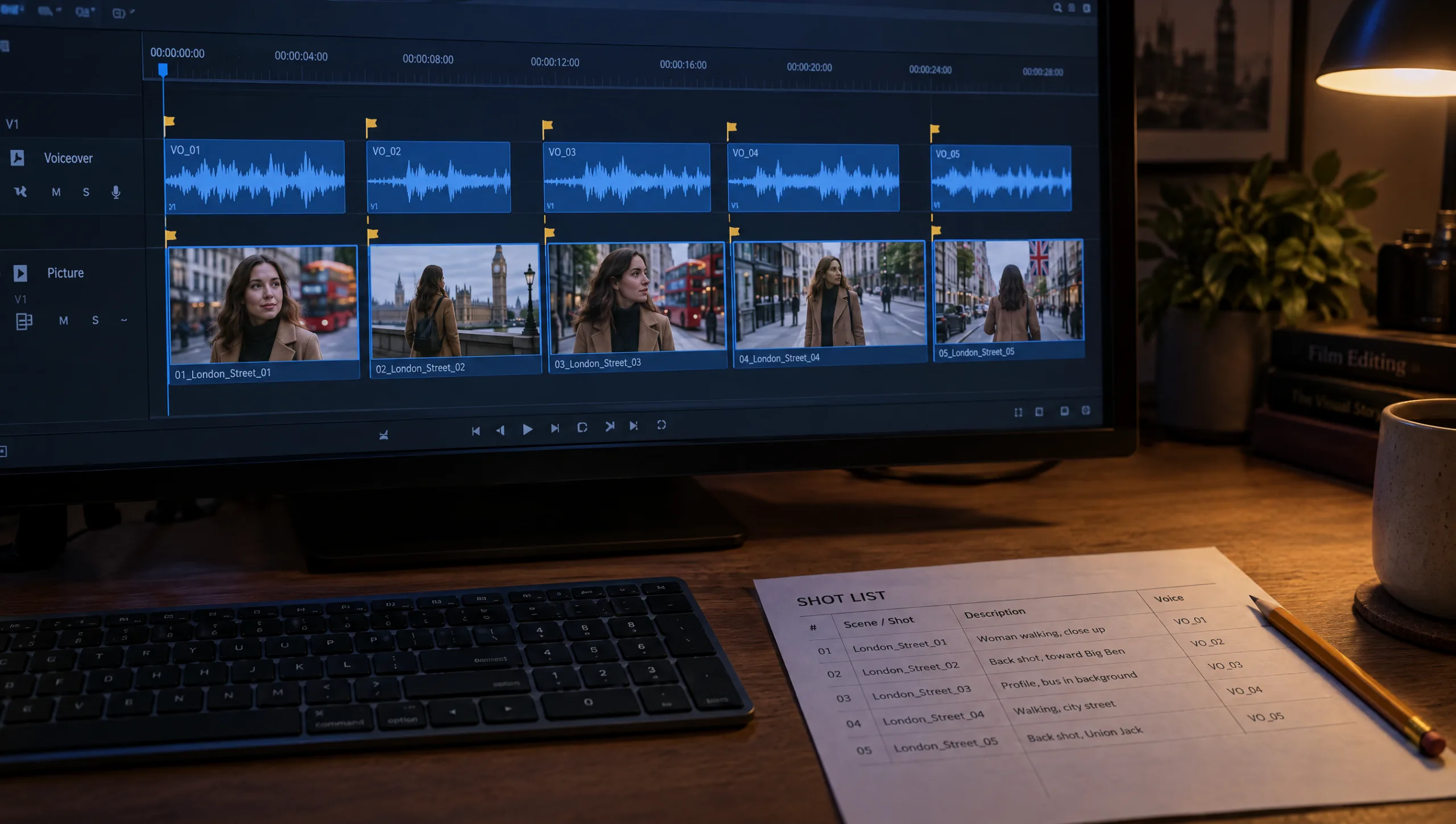
The mistake is to let the voice arrive before the picture. If the voice is already warm at the medium shot, the embrace has nothing left to give. So read the shot list and the script side by side, and mark where each station lands in both. They should land together. The emotional arc of a short film has the stations; the tagged script from writing a short film script with AI has the lines.
The Restrained Palette
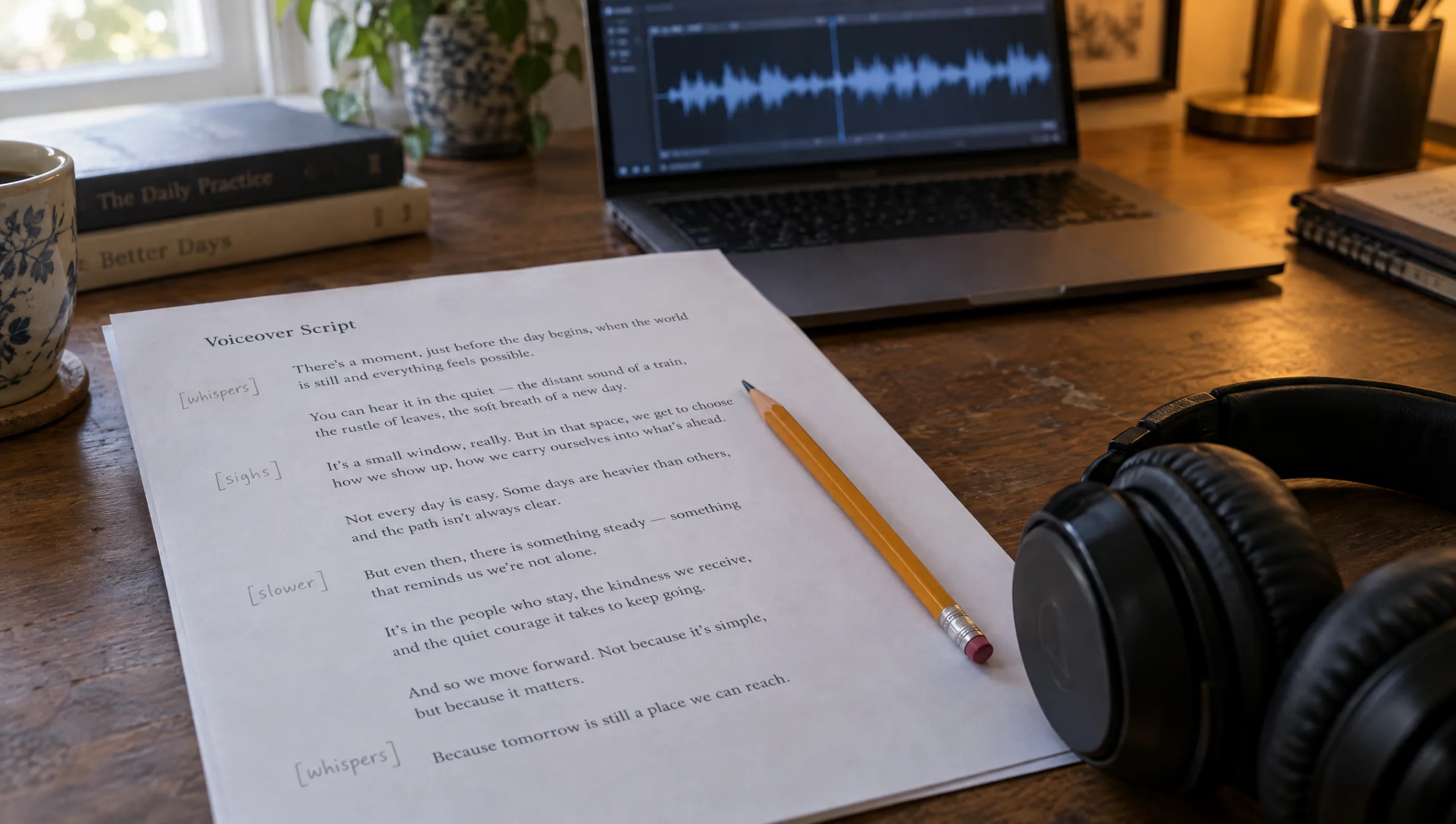
ElevenLabs v4 responds to performance directions in square brackets, and the temptation is to use a lot of them. Do not. The master prompt gives a small palette for a reason: [thoughtful], [storytelling], [slightly amused], [anxious], [whispers], [voice trembling], [crying softly], [relieved], [tenderly], [reflective], [warmer], [quiet confidence]. Twelve directions for eighty-six words is already more than you need. A good tagged script uses five or six.
The rule is the same as the restraint rules for the story. A direction goes in only where the performance genuinely changes. One at the opening to set the register, another where tension begins, a third at the drop. Then one at the turn, and the last at the release. Everything else is the voice carrying on in the register it was last given. That is exactly what a real person telling a true story does. The tag mechanics, with a real before and after you can listen to, are in directing an AI voiceover with ElevenLabs audio tags.
The Pause Is the Direction
In v4 a pause is written as an ellipsis. The ellipsis before the turn is the single most important mark in the script. It is the breath in the second take. The audience’s feeling arrives in that gap, before the word, because the body has already told them what is coming. Put one ellipsis before the turn, one after it, and resist the urge to put them anywhere else. A script full of pauses is a script that does not trust its own words.

Three Prompts for the Voice
Prompt 1: The Tag Pass
First, the pass that places the directions.
Here is my clean fifty-second script: [PASTE PART 1]. Here are the seven stations in order: vulnerability, tension, isolation, lowest beat, recognition, connection, release, callback. Mark the script for ElevenLabs v4 using at most six directions from this palette: [thoughtful], [storytelling], [slightly amused], [anxious], [whispers], [voice trembling], [crying softly], [relieved], [tenderly], [reflective], [warmer], [quiet confidence]. Place a direction only where the performance changes station. Write exactly two pauses as ellipses: one before the turn and one after it. Return the tagged script and one line explaining each direction.Prompt 2: The Overload Check
Next, because the first pass always adds too many, count them.
Here is my tagged script: [PASTE PART 2]. Count the directions. If there are more than six, tell me which to remove and why, keeping the one before the turn. Flag any direction that names an emotion the words already carry. Flag any pause that is not immediately before or after the turn. Return the cleaned script.Prompt 3: The Sync Check
Finally, line the voice up against the pictures.
Here is my shot list with sizes: [PASTE IT]. Here is my tagged script: [PASTE IT]. Line them up by station and tell me, for each station, whether the voice and the picture arrive together. Flag any place where the voice is warmer or more released than the shot it sits over, and any place where the picture has reached the turn before the voice has. Suggest the smallest change to bring them into step.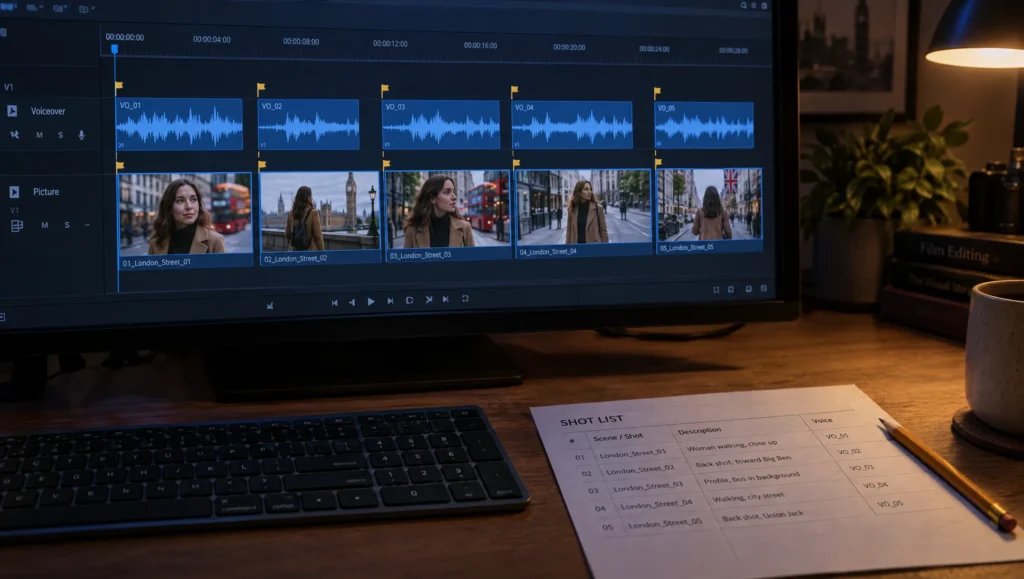
The Emotional Integrity Audit
Before the film goes anywhere, ask it ten questions. Watch it once with the sound off and once with the picture off, then answer honestly.
First, is the relationship real and specific, not a type? Second, does the audience feel the distance before the turn, or only see it? Third, is the lowest beat held in silence? Fourth, is the recognition on screen, the half-second where one person sees the other? Fifth, is the turn a single visible act? Sixth, does the body register it before anyone explains? Seventh, is there one peak, and only one? Eighth, does any line of voice tell the audience what to feel? Ninth, is the music doing work the pictures should be doing? Tenth, does the callback return to the opening image with a different meaning?
A no on any of the first seven means the story needs another pass. Yes on the eighth or ninth means the film is sentimental and needs a cut. No on the tenth means it ends rather than lands. Run the audit on the phone film and it passes nine of ten on the first cut. The line that failed the eighth question is the one the sentimentality cut removed in part 6.
The Seven-Day Practice
The method becomes a habit in a week if you do one small thing a day. On day one, write down a real moment of sudden connection, in plain language, and run the feeling check from part 1. The second day is the relationship sentence and the two words of the connection contrast. On the third, lay the nine beats and fold them into five to seven shots. Day four is the master prompt and the three checks, read aloud with a timer. Then, on the fifth, write the character brief from the sentence and the wardrobe lock from the vulnerability. Day six is generation, but only the lowest beat and the turn, to see whether the bodies say what the words would have. Finally, on day seven, tag the script, record it, lay it over the two frames, and run the audit on those ten seconds.
After seven days you have not made a film. You have made the two frames and the ten seconds that matter most, and you know whether the moment holds. If it does, the rest is production. If it does not, you have lost a week rather than a month. You go back to day one with a different moment.
The Light at the End
The series opened on a coat on a hook. Here is where it lands. The feeling has a name, the name has a trigger, and the trigger has a shape. The shape has a method that runs from a plain paragraph to a breath before one word. None of it requires a better model or more credits. It requires a real moment, the order of work, and restraint. Above all, it requires the willingness to let the audience feel it before you tell them to. The coat is still on the hook. The key is in the door. The Art of Kama Muta holds the whole map, and the film this series is built on is there.

Common mistake
Performing the feeling. The voice cries at the turn, the music swells, the tag says [crying softly] on three lines in a row. The audience was about to feel it on their own and the film did it for them. Restraint is the performance. One direction, one breath, one word.
Quick version
The voice walks the same path as the camera at the same pace, and must not arrive first. Direct an ElevenLabs v4 voice with at most six directions from a restrained palette, placed only where the performance changes station. Add one ellipsis before the turn and one after. Then run the ten-question emotional integrity audit on the finished film, and follow the seven-day practice until the method is a habit.
Your move
Run Prompt 1 on your clean script, then Prompt 2, then record it in ElevenLabs v4. Play it to one person without telling them what to listen for, and watch their hands at the pause before the turn. That is your audit for today. Tomorrow, start day one of the practice with a different moment.
Get the prompts. All three prompts and the ten-question audit are in the free Prompt Library under Story and Voice.
Related articles
- The Art of Kama Muta, the pillar guide
- directing an AI voiceover with ElevenLabs audio tags
- fitting an AI voiceover to a fifty-second film
- cloning your own voice in ElevenLabs
Paid next step: The Kama Muta Storytelling Masterclass. It contains the full audit, the seven-day practice as a printable, and three case studies taken through every step.
Frequently Asked Questions
How many audio tags should a fifty-second voiceover have?
Five or six at most, placed only where the performance changes station, with one ellipsis before the turn and one after. More than that and the voice performs the feeling instead of trusting the audience with it.
How do I write a pause in ElevenLabs v4?
As an ellipsis. Put one immediately before the turn and one immediately after. Avoid pauses elsewhere unless the body would pause there.
What is the emotional integrity audit?
Ten questions asked of the finished film: real relationship, felt distance, silent lowest beat, recognition on screen, single visible turn, body before explanation, one peak, no line that explains the feeling, no music doing the pictures’ work, and a callback that lands.
Should the voice or the picture carry the emotional turn?
Both, together, with the picture a fraction ahead. The breath before the word lets the audience feel it from the body first, and the word confirms it.







Read the Comments +