
STORYTELLING AND SCRIPTS · THE ART OF KAMA MUTA, PART 4
A woman on a bench outside a hospital, eight in the morning, a coffee going cold in her hand. She has been there since six. Her son is inside, and the nurse has said nothing for two hours. She watches the doors. Then they open. A porter pushes out a boy of nine in a wheelchair, with a plaster on his arm and a face trying very hard to be brave. She does not run. She stands, puts the coffee down carefully on the bench, and walks to him. Only when she kneels does the boy’s face give way. If you felt that in order, you felt a path: a worry, a wait, a lowest moment, a door, a face, a release. This article is that path, station by station, so you can lay a film along it on purpose.
At a glance
- A film built for kama muta travels seven stations: vulnerability, tension, isolation, the lowest beat, recognition, connection, release. Then a callback.
- The path the masterclass gives the voiceover is the same path the pictures travel. Voice and camera walk it together.
- Five restraint rules keep the feeling honest. Never invent trauma, never tell the audience what to feel, allow one peak only, let silence and touch carry meaning, and protect the dignity of whoever the story belongs to.
- Three feelings look like kama muta and are not: pity, invented tragedy, and awe for its own sake.
- Sentimentality is kama muta with the volume turned up by the filmmaker instead of by the audience.
You will need: your plain-language event from part 3, and the four-move test from part 2.
The Path in Seven Stations
The feeling itself lasts a few seconds. Everything before it is preparation, and the preparation has an order. Here is the path a fifty-second film travels, with the hospital bench as the example.
Vulnerability
First, open with something human and imperfect that the audience recognises in themselves. The cold coffee. The woman who has not moved for two hours. Vulnerability is what makes the audience care about the bond before they see the gap. Without it, the rest of the path is a series of events happening to a stranger.
Tension
Next, raise a question the audience wants answered. What has happened to the son. Will the doors open. Tension is curiosity with a cost attached, and it is therefore what holds people past second four.

Isolation
After that, show the distance. The woman is on her own on the bench. Nobody comes out to tell her anything. In your own film this is the beat where the person your protagonist belongs to is absent, silent, or far away. The audience feels it.
The Lowest Beat
This is the instant it seems the connection may not happen. The hospital doors stay shut. A hand rises to photograph the light and it is empty. The lowest beat is short, often one shot. It must come immediately before the turn, because the surge is proportional to the drop.
Recognition
The doors open and she sees him. Recognition, in other words, is the half-second between the lowest beat and the connection, when one person sees the other and the audience sees them see. It is often the most moving frame in the film, yet most beginners cut it.

Connection
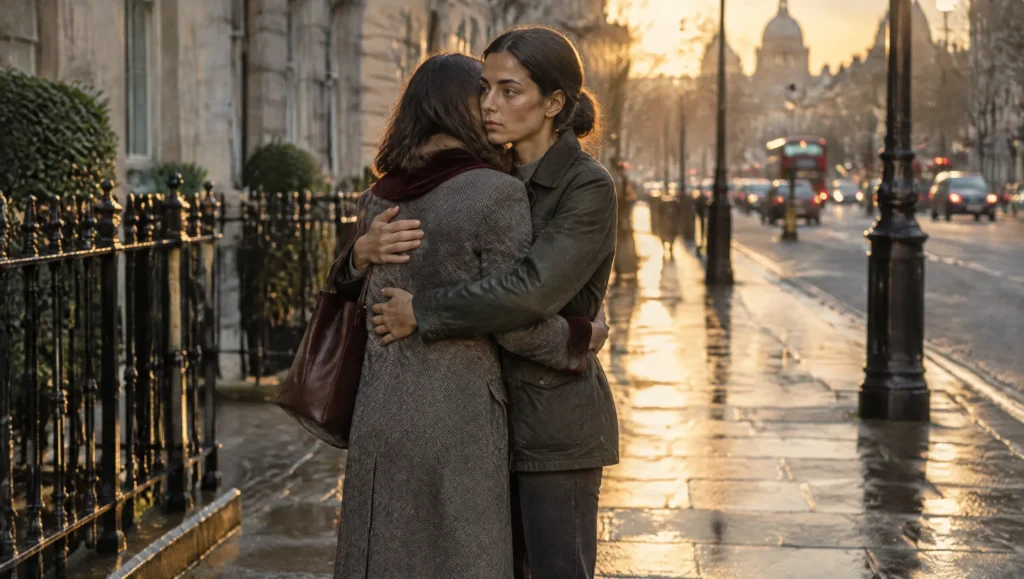
Then the visible act. She kneels. A hand is taken. One word is said. This is the kama muta moment, and the rules from the art of emotional storytelling apply: sudden, visible, and silent or nearly so.
Release
Then the body. Now the boy’s face gives way. The breath, the tears, the laugh. The audience is already feeling it, so the film holds for two or three seconds and does not explain. After release comes the callback. The opening image, the coffee on the bench, the coat on the hook, seen again with a different meaning.

The Voice Walks the Same Path
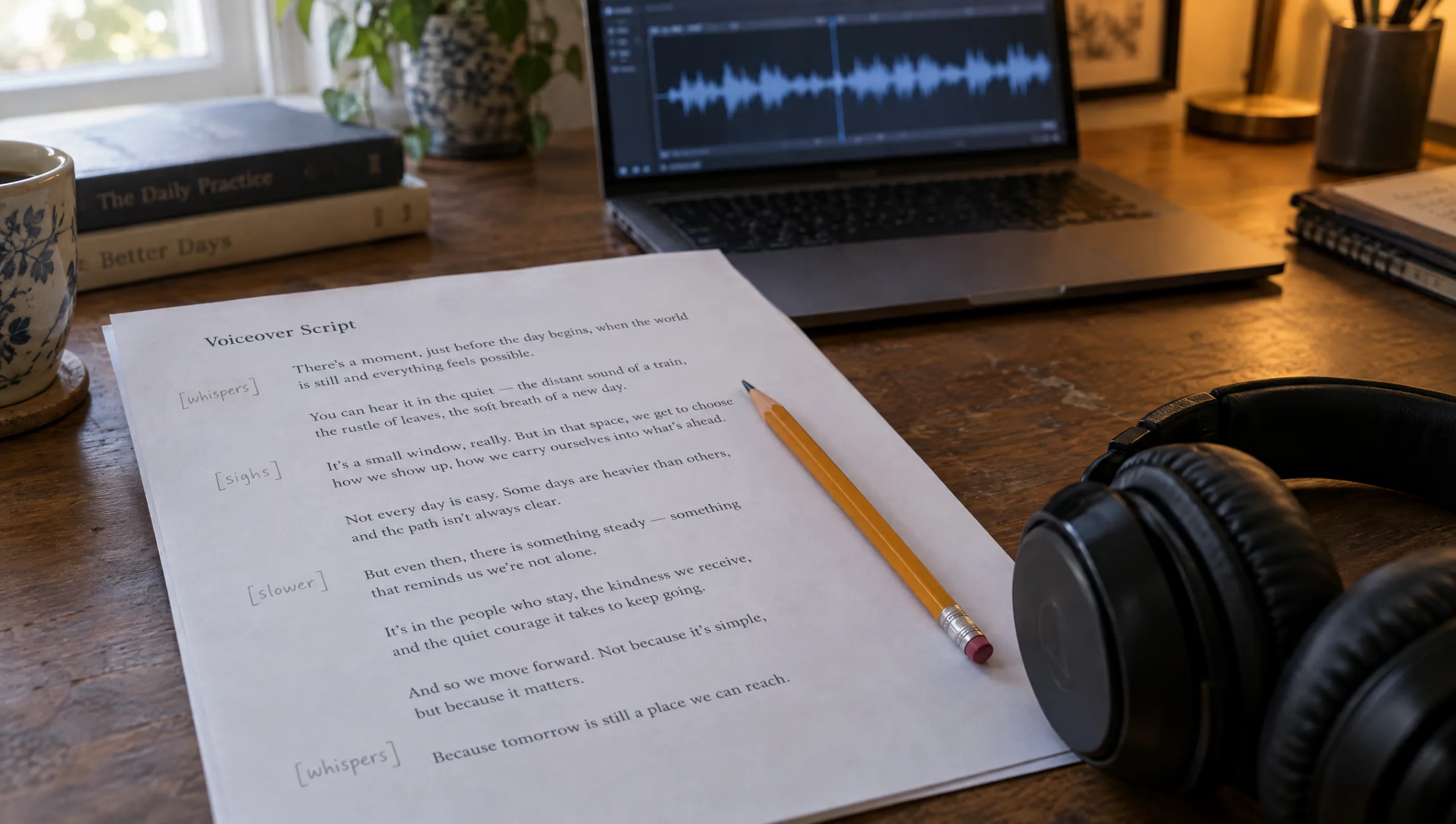
If you have read the voice articles on this blog, this path will look familiar. It is the emotional movement the master prompt gives a voiceover. Vulnerability, curiosity, escalation, loneliness or tension, recognition, human connection, emotional release, change, callback. That is not a coincidence. The voice and the camera travel the same road at the same pace. When one of them runs ahead, the film feels false. directing an AI voiceover with ElevenLabs audio tags shows the voice walking it, with a real tagged script and the before and after you can hear.
The Five Restraint Rules
The path is easy to describe and easy to overdo. Five rules keep the feeling honest.
First, never invent trauma. The research is clear that the trigger is closeness arriving, not suffering, and audiences can smell a manufactured tragedy. A stolen phone is enough. A small loss, held with care, moves people more than a large one they do not believe.
Second, never tell the audience what to feel. No line of voiceover that says “I realised how much she meant to me”. The hand taken says it. If the audience needs telling, the pictures have failed, and telling will not fix them.
Third, one peak only. A fifty-second film has room for one turn. Two embraces, two reunions, two revelations, and the feeling splits and halves. Choose the moment and protect it.
Fourth, let silence and touch carry meaning. The surge arrives through the body, so give the body the frame. Silence before the turn, touch at the turn, breath after it.
Finally, protect the dignity of whoever the story belongs to. If the moment is real, someone real lived it. The film must leave them whole, not exposed. This rule is also the reason the family in my own film appears only as the finished film and never as reference sheets.
The Emotions That Look Like Kama Muta and Are Not
Three neighbours live next door to the feeling, and a film that wanders into them loses the share.
Pity is the first. In short, pity makes the audience look down at the protagonist. Kama muta makes them feel beside her. If your lowest beat makes the viewer feel sorry for someone rather than afraid for the bond, the camera has stepped back. It should have stepped in.
Invented tragedy is the second. For example, a death added for weight, a diagnosis the real story never had. As a result it produces sadness, which the audience resents when they sense the trick, and it breaks the first restraint rule.
Awe for its own sake is the third. For instance, a beautiful drone shot, a cathedral of light, a sunset over the river. Awe makes people feel small and quiet. It can set a scene, but it cannot carry the turn, because the turn is about two people and not about the sky.
And then there is sentimentality, which is not a neighbour but a failure mode of the feeling itself. Sentimentality is kama muta with the volume turned up by the filmmaker. Swelling music at the embrace, slow motion on the tears, a voiceover that underlines. In that case the audience was about to feel it on their own. Instead, the film did it for them, and they felt nothing.
Three Prompts for the Path
Prompt 1: The Seven Stations
First, this one asks the questions.
Here is my real event in plain language: [PASTE IT]. Place it on this path, one line per station: vulnerability, tension, isolation, the lowest beat, recognition, connection, release, callback. For each station, say what the audience sees, not what they feel. If a station is missing from the event, say so and suggest the smallest true detail that could fill it. Do not add events that did not happen.Prompt 2: The Restraint Audit
After that, test what came back.
Here is my film idea or script: [PASTE IT]. Check it against five rules: no invented trauma; nothing that tells the audience what to feel; one peak only; silence and touch carry the turn; the dignity of the real people is protected. For each rule, answer pass or fail with the line or beat that decides it. Then tell me the single cut that would improve it most.Prompt 3: The Neighbour Check
Finally, bring it together.
Read this film idea: [PASTE IT]. Tell me which feeling it actually produces at its peak: being moved, pity, sadness from invented tragedy, awe, or sentimentality. Explain in two lines what in the idea points to that feeling. If it is not being moved, tell me what would have to change at the lowest beat or the turn, without adding dialogue or music.From the Path to the Structure
The seven stations are feelings. Next, the following article turns them into a structure: the relationship sentence, the nine beats, and how nine beats fold into fifty seconds. That is short film story structure built on one feeling. The whole method, from the word to the film, is on one page in The Art of Kama Muta.
Common mistake
Cutting the recognition. The lowest beat is shot, the embrace is shot, and the half-second between them is left on the floor. Nothing happens in it, the editor thinks. Everything happens in it. Yet the audience needs to see the face change before the body moves, otherwise the embrace arrives from nowhere.
A note from Patchy
Quick version
A film built for kama muta travels seven stations. Vulnerability, tension, isolation, the lowest beat, recognition, connection, release, then a callback to the opening image. The voice walks the same path as the camera. Five rules keep it honest. No invented trauma, never tell the audience what to feel, one peak, let silence and touch carry the turn, and protect the dignity of the real people. Pity, invented tragedy and awe are neighbours, not the feeling. Sentimentality is the feeling with the volume turned up by the wrong person.
Your move
Run Prompt 1 on your plain event and look at the station that came back empty. That is the beat to find a true detail for, before you write a word of script. Then run Prompt 2 on the result and make the one cut it recommends.
Get the prompts. All three prompts from this article are in the free Prompt Library under Story.
Related articles
- The Art of Kama Muta, the pillar guide
- directing an AI voiceover with ElevenLabs audio tags
- fitting an AI voiceover to a fifty-second film
- how to write a 50-second story for an AI short film
Paid next step: The Kama Muta Storytelling Masterclass. It holds the full emotional integrity audit and three case studies walked station by station.
Frequently Asked Questions
What is the emotional arc of a short film?
For a film built to move people: vulnerability, tension, isolation, the lowest beat, recognition, connection, release, and a callback to the opening image. Each station prepares the next.
How do I avoid being sentimental?
Let the audience turn the volume up, not the film. No swelling music at the turn, no slow motion on tears, no voiceover that explains the feeling. Silence and touch do the work.
What is the difference between pity and being moved?
Pity looks down at someone; being moved stands beside them. If the viewer feels sorry for the protagonist instead of afraid for the bond, the film has drifted into pity.
Can I have two emotional peaks in fifty seconds?
No. One turn, protected. A second peak halves the first.







Read the Comments +