
Your ideal client avatar is the foundation every marketing decision should rest on. Without it, you are essentially writing to everyone, and when you write to everyone, you connect with no one. Most professionals acknowledge they need a target audience. However, having a vague sense of who you serve and having a precise, well-researched ideal client avatar are two entirely different things. The gap between those two positions is where most marketing quietly fails. You invest time, energy, and budget into content, campaigns, and outreach. The results feel inconsistent. The problem is rarely the channel or the execution. It is the clarity behind who you are speaking to.
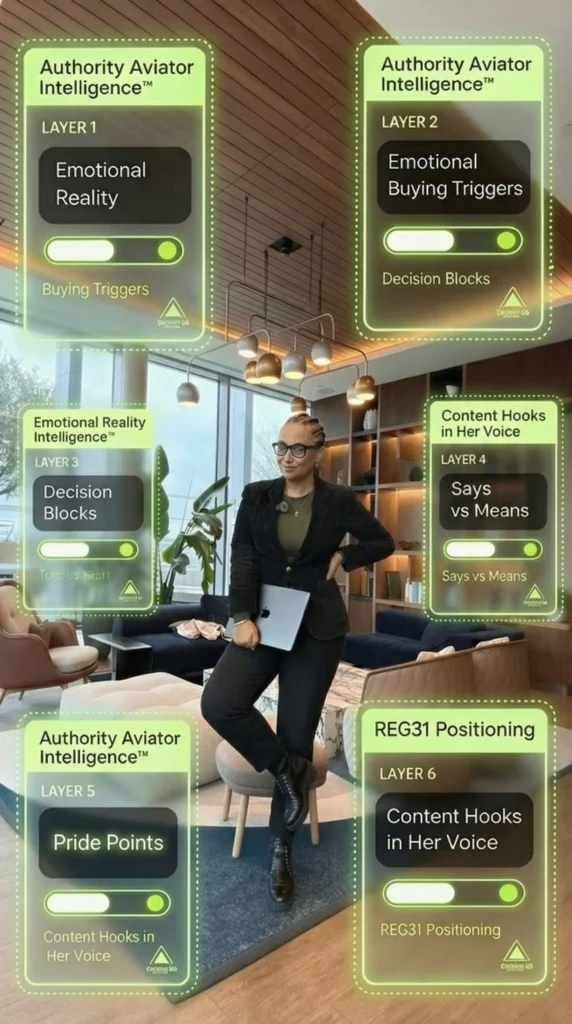
Why Your Ideal Client Avatar Matters More Than Your Marketing Channel
Professionals frequently focus on the wrong variable. They optimise the platform, refine the design, and experiment with posting schedules. Nevertheless, none of those adjustments compensate for a weak understanding of the person on the other side of the screen. Your ideal client avatar is the lens through which every marketing decision should be filtered. When you understand who you are speaking to at a deep level, you know what language resonates, what fears hold them back, and what outcomes they genuinely desire.
“Marketing to the right person with the wrong message still fails. Marketing to the wrong person with the right message fails faster.”
Your ideal client avatar is not a demographic summary. It is a dimensional, living profile that shapes tone, content, offers, and positioning. Most marketing underperforms not because of poor execution, but because of poor specificity. The rule is straightforward: the more precisely you define your ideal client avatar, the more clearly your marketing speaks, and the more consistently your results compound.
The Specificity Problem That Undermines Your Ideal Client Avatar
The most common trap is building an ideal client avatar that is too broad. Professionals describe their audience as “business owners aged 30 to 50 who want more clients.” Consequently, the content becomes generic. The messaging lacks tension. The leads remain inconsistent. Moreover, a vague ideal client avatar produces vague copy, which produces vague results. Why Audience Personas Matter for Content Strategy
contentmarketinginstitute.com
Without a precise ideal client avatar, you cannot write a compelling headline. You cannot structure an offer that feels urgent or relevant to a specific person. You cannot build a lead generation system that reliably attracts the right people. The consequences compound over time: wasted budget, low engagement, and a growing belief that marketing simply does not work. It does work. However, it only works when your ideal client avatar is specific enough to guide every word you produce.
What Your Ideal Client Avatar Actually Includes
A well-built ideal client avatar goes far beyond demographics. It captures the full picture of the person you are trying to reach, including how they think, what they fear, and what they are quietly working towards.
Demographics and context. Age, profession, income level, location, and life stage provide the structural foundation of your ideal client avatar. These details shape the practical realities of your audience’s everyday life.
Primary goals and desires. What does your ideal client avatar want to achieve? Not in vague terms, but specifically. More clients, more predictable revenue, more recognition in their field, or a business that operates without their constant presence.
Core frustrations and complaints. What keeps them up at night? What have they already tried? Understanding the frustrations of your ideal client avatar allows you to write with precision and genuine empathy.
Objections and mistaken beliefs. Your ideal client avatar arrives with assumptions that may prevent them from taking action. Identifying these allows you to address them directly in your content and offers. How to Overcome Client Objections Through Your Content.
Emotional triggers and motivators. What causes your ideal client avatar to act? Fear of falling behind, desire for recognition, frustration with stagnation. These emotional drivers shape the tone and urgency of everything you create.
Language and communication style. Your ideal client avatar uses a specific vocabulary. Reflecting that language back in your content creates instant connection and positions you as someone who genuinely understands them.
The Four Steps to Build Your Ideal Client Avatar Framework
First, gather real evidence. Do not build your ideal client avatar from assumptions. Review client conversations, sales calls, testimonials, and social media comments. Your best clients will describe your ideal client avatar in their own words if you listen carefully and record what they say.
Second, map the emotional journey. Identify where your ideal client avatar is today, where they want to be, and what is standing between those two points. This emotional arc becomes the structure for your content, your offers, and your positioning. The distance between their current situation and their desired outcome is precisely where your value lives.
Third, write in their voice. Take the language your ideal client avatar uses naturally and reflect it back in your content. When a reader thinks “this is exactly how I would describe my situation,” you have found the right register. That level of resonance is only achievable with a precise ideal client avatar as your guide.
Fourth, test and refine continuously. Your ideal client avatar is not a static document. As your business evolves and your audience grows, revisit and sharpen the profile. The most effective marketers treat their ideal client avatar as a living asset, reviewed regularly rather than created once and forgotten.
Ideal Client Avatar Versus General Target Audience
A general target audience tells you roughly who might be interested. Your ideal client avatar tells you exactly who is ready to act, and why. These are not the same thing, and treating them as equivalent leads to content that is technically relevant but emotionally disconnected. Building a Content Strategy That Attracts the Right Clients | www.digitalistyle.com/content-strategy]
Most professionals skip the depth because it feels unnecessary at the time. In contrast, those who invest in a precise ideal client avatar consistently produce content that converts. The difference is not talent or budget. It is specificity, applied consistently over time.
How Your Ideal Client Avatar Deepens Your Marketing Authority
The most powerful aspect of a well-researched ideal client avatar is what it reveals about how your audience makes decisions. Your ideal client avatar does not simply want a result.The most powerful aspect of a well-researched ideal client avatar is what it reveals about how your audience makes decisions. Your audience does not simply want a result. What they want most is to feel understood on the path to that result. Previous approaches that did not deliver have left their mark. Moreover, assumptions about what is possible for someone in their position run deep, and often there is a version of success they want but may hesitate to articulate.
When your marketing speaks to those deeper layers, it stops feeling like marketing altogether. It begins to feel like a conversation. Indeed, that shift, from broadcasting to connecting, is what separates average marketing from marketing that builds authority and compounds results over time. The Role of Audience Understanding in Marketing Performance if you like to summarise use this free AI Glarity
The Compound Effect of Your Ideal Client Avatar
When you build your marketing on a precise ideal client avatar, the results compound. When you build your marketing on a precise ideal client avatar, the results compound. The right people find your content. Offers speak directly to the right problems. As a result, leads arrive already aligned with how you work and what you provide. Over time, you spend less effort convincing and more time converting.
Start by auditing your current content against your ideal client avatar. Ask whether each piece speaks to a specific, dimensional person or to a vague, general audience. Refine your messaging to reflect the precise language, fears, and desires of your ideal client avatar. Build every future piece of content from this foundation.
Your ideal client avatar beats guesswork consistently. And it changes everything about your results.










Read the Comments +